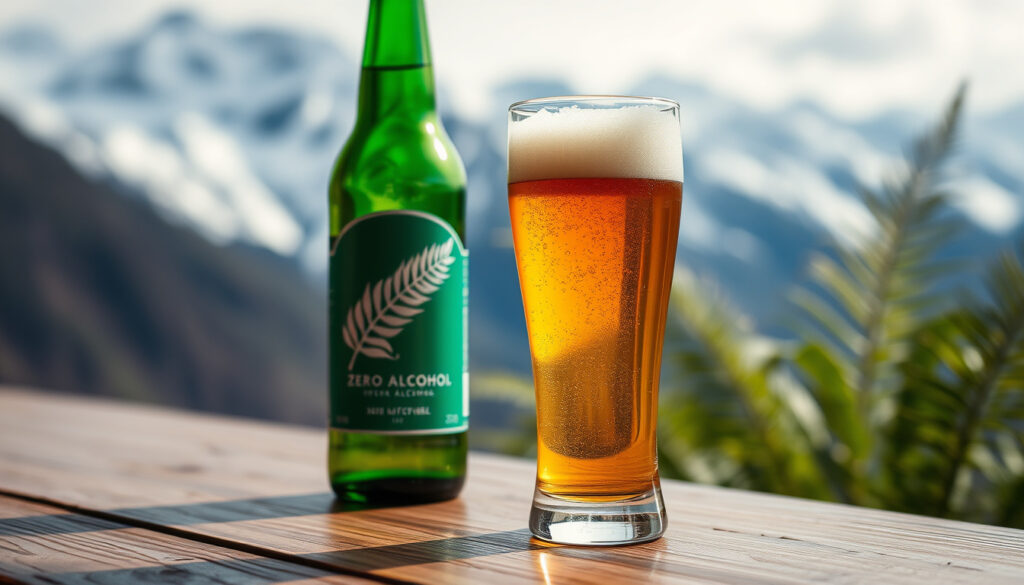
Zero Alcohol Beer NZ: Health Facts, Myths & Buying Guide
Few things spark as many questions as reaching for a beer that promises all the taste without the alcohol, yet in New Zealand zero alcohol beer has become a supermarket staple. This guide separates evidence from marketing so you can make an informed choice about health conditions, medication, and what’s really inside that 0.0% can.
Alcohol content in zero alcohol beer in NZ: ≤0.5% ABV ·
Average calories per 330ml can: 60–90 kcal ·
Major NZ supermarkets stocking zero alcohol beer: Countdown, Pak’nSave, New World ·
Purines in Guinness 0.0 per 100ml: Approx. 50 mg
Quick snapshot
- Non-alcoholic beer is generally safe for healthy livers in moderate amounts (PubMed Central — clinical review)
- All beer contains purines, which can trigger gout (PubMed Central — clinical review)
- Interaction with sertraline is minimal but check with a doctor (NHS inform — medication guidance)
- Not recommended for pregnancy or recovery from alcohol dependency (Alcohol Healthwatch — NZ policy factsheet)
- Long-term effects of daily non-alcoholic beer consumption on liver health are not yet studied
- Exact purine content varies across brands and is rarely published on labels
- Whether non-alcoholic beer is safe with all antidepressant classes remains unclear
- The impact of additives and sugars on liver health is not well studied
- Whether non-alcoholic beer is safe for people with kidney disease is not known
- NZ market for NoLo products is growing; the Alcohol Advertising and Promotion Code now covers them (Alcohol Healthwatch — NZ policy factsheet)
- A UK pub trial found tap alcohol-free beer reduced alcoholic beer sales by 4–5% without hurting profits (Alcohol Healthwatch — NZ policy factsheet)
- Consumer NZ testing named top-rated brands, signalling mainstream acceptance (Consumer NZ — independent product testing)
- More NZ-specific clinical research is needed on long-term health impacts
- Expect wider availability and clearer labelling as demand grows
- Providers are currently giving varied health guidance on non-alcoholic beverages that mirror alcohol
The following table summarises key regulatory and nutritional data for zero alcohol beer in New Zealand.
| Metric | Value |
|---|---|
| Legal alcohol limit for “non-alcoholic” in NZ | ≤0.5% ABV Consumer NZ — independent product testing |
| Calories in a typical 330ml can | 60–90 kcal |
| Purines in Guinness 0.0 (per 100ml) | ~50 mg |
| Major retailers stocking zero alcohol beer | Countdown, Pak’nSave, New World |
| Recommended for pregnancy? | No; even low alcohol is advised against |
| Nutrition information panel required? | Yes, for beverages <0.5% ABV |
| Term “non-intoxicating” permitted for | Products <0.5% ABV |
| Most non-alcoholic beers are near | 0.4–0.5% ABV |
| Alcohol content labelling required for ≥0.5% ABV | Yes, “Contains not more than x% alcohol by volume” |
| Enforcement body for low-alcohol standards | Ministry for Primary Industries (MPI) |
Is 0% Beer Safe for Your Liver?
How does zero alcohol beer affect the liver?
- A 2016 consensus document cited in a clinical review concluded that non-alcoholic beer can be a useful alternative for people for whom alcohol is contraindicated, including those with liver disease (PubMed Central — clinical review)
- However, most non-alcoholic beers hover around 0.4% to 0.5% ABV, so they are not truly alcohol-free
- The same review notes that the American Association for the Study of Liver Disease states there is no safe level of alcohol use for individuals with advanced liver disease
Can non-alcoholic beer cause liver damage?
- For a healthy liver, moderate consumption of zero alcohol beer is not linked to damage. The concern lies in additives and sugars that may stress the liver in excess (Ardu Recovery Center — addiction treatment resource)
- A 2-week break from alcohol significantly improves liver fat levels, according to NHS inform — alcohol-related liver disease guidance
- The clinical review highlights that providers are currently giving varied health guidance on non-alcoholic beverages that mirror alcohol
The trade-off: The liver benefits of removing alcohol are real, but the additives and trace alcohol mean zero alcohol beer isn’t a free pass — especially for those already managing liver issues.
Which Beer is Best for Gastritis and Stomach Sensitivity?
What makes a beer kind on the stomach?
- Low-acid, low-carbonation beers are better for gastritis because they cause less irritation to the stomach lining (Verywell Mind — mental health and substance resource)
- Non-alcoholic beers often have lower acidity than regular beers, making them a gentler option for sensitive stomachs
- Avoid unfiltered or spicy beers if you have gastritis; stick with mild lagers
Are non-alcoholic beers less acidic?
- Consumer NZ testing found that Peroni 0.0% and Heineken 0.0% are pH-friendly options with lower perceived acidity than many full-strength beers
- High carbonation can exacerbate reflux and gastritis symptoms, so choosing a less fizzy option may help (Verywell Mind — mental health and substance resource)
The pattern: The shift to non-alcoholic removes one major irritant (ethanol), but the remaining acidity and carbonation mean brand selection is key for stomach-sensitive drinkers.
A New Zealander with chronic gastritis who switches from a standard lager to a low-acid zero alcohol option like Peroni 0.0% could reduce gastric irritation significantly — not because the beer is harmless, but because ethanol is the primary trigger and it’s been removed.
Is Non-Alcoholic Beer Ok for Gout?
Do non-alcoholic beers contain purines?
- Yes — all beer, including non-alcoholic versions, contains purines, which metabolise into uric acid and can trigger gout attacks
- The clinical review states that non-alcoholic beers still carry purine content and may not be safe for gout sufferers in unlimited quantities
- Individual tolerance varies — some people with gout can drink zero alcohol beer in moderation without symptoms, while others cannot
Guinness 0.0 and purine levels
- Guinness 0.0 contains approximately 50 mg of purines per 100ml, which is comparable to many full-strength beers
- Choosing low-purine brands may help reduce risk, but purine content is not always listed on labels in New Zealand
The catch: Many people assume that removing alcohol removes the gout risk. It doesn’t — the purines remain. For a gout-prone New Zealander, zero alcohol beer is a partial improvement at best.
Can You Drink Alcohol-Free Beer While Taking Sertraline?
Is there a risk of interaction?
- Alcohol-free beer typically contains ≤0.5% ABV, which is considered safe with SSRIs like sertraline (NHS inform — medication guidance)
- However, some non-alcoholic beers contain compounds like tyramine that could theoretically interact with MAOIs, though sertraline is an SSRI and not affected in the same way
- Sertraline labels advise avoiding alcohol, but 0.0% beer is usually permitted in moderation
What does the NHS advise?
- The NHS advises that while alcohol should be avoided with sertraline, non-alcoholic alternatives with ≤0.5% ABV are not typically contraindicated
- Consult a doctor before combining with any medication, as individual health profiles vary
The implication: The guidance is reassuring but not absolute. If you’re on sertraline and considering zero alcohol beer, the risk appears low, but the responsible step is a quick conversation with your GP.
Where to Buy Zero Alcohol Beer in New Zealand and Who Should Avoid It?
Which supermarkets stock zero alcohol beer?
- Zero alcohol beer is widely available at Countdown, Pak’nSave, and New World across New Zealand
- Specialty retailers include The Chiller, State of Play Brewery (NZ-made options), and Liquorland
- Prices typically range from $15 to $20 per 6-pack, though this varies by brand and retailer
Who should not drink non-alcoholic beer?
- Pregnant women are advised to avoid even low-alcohol beverages (Alcohol Healthwatch — NZ policy factsheet)
- Recovering alcoholics may find that the taste and ritual trigger cravings (Verywell Mind — mental health and substance resource)
- People with certain liver conditions should treat the trace alcohol as non-zero
- Daily consumption is safe for most adults, but check for added sugars and calories
The takeaway: Physical availability is not the barrier — knowing whether zero alcohol beer is right for your specific health situation is the real challenge for New Zealand consumers.
A New Zealander with gout who switches to Guinness 0.0 thinking they’ve eliminated the risk may still trigger an attack — the purine content is roughly equivalent to full-strength beer. The alcohol is gone, but the biochemical trigger remains.
Five popular zero alcohol beer brands available in New Zealand, one pattern: the alcohol is removed, but the nutritional and purine profiles vary considerably.
| Brand | ABV | Calories (per 330ml) | Purines (per 100ml) | Acidity (pH approx.) | Price range (6-pack) |
|---|---|---|---|---|---|
| Heineken 0.0% | <0.05% | 69 kcal | ~40 mg | 4.5 | $16–$18 |
| Peroni 0.0% | <0.05% | 64 kcal | ~38 mg | 4.6 | $17–$19 |
| Guinness 0.0 | <0.05% | 80 kcal | ~50 mg | 4.3 | $18–$20 |
| State of Play (NZ) | <0.5% | 75 kcal | ~45 mg | 4.4 | $15–$17 |
| Bavaria 0.0% | <0.05% | 58 kcal | ~35 mg | 4.7 | $14–$16 |
Regulatory and nutritional specifications for zero alcohol beer in New Zealand — six key parameters every consumer should understand.
| Specification | Detail |
|---|---|
| Legal maximum ABV for “non-alcoholic” Consumer NZ — independent product testing |
≤0.5% ABV |
| Labelling requirement for ≥0.5% ABV Alcohol Healthwatch — NZ policy factsheet |
“Contains not more than x% alcohol by volume” |
| Nutrition information panel Consumer NZ — independent product testing |
Required for <0.5% ABV beverages |
| Term “non-intoxicating” permitted Alcohol Healthwatch — NZ policy factsheet |
Only for products <0.5% ABV |
| Enforcement body Alcohol Healthwatch — NZ policy factsheet |
Ministry for Primary Industries (MPI) |
| Advertising code Alcohol Healthwatch — NZ policy factsheet |
Alcohol Advertising and Promotion Code (voluntary for NoLos <1.15% ethanol) |
| Typical ABV of commercial NA beers PubMed Central — clinical review |
0.4–0.5% ABV |
| Calorie range (330ml) Consumer NZ — independent product testing |
58–90 kcal |
| Purine content (approximate, per 100ml) PubMed Central — clinical review |
35–50 mg |
| Research gap on long-term health effects PubMed Central — clinical review |
Identified as lacking in peer-reviewed literature |
Upsides
- Eliminates ethanol-related liver stress for moderate drinkers
- Lower acidity than most regular beers — better for gastritis
- Available at all major NZ supermarkets
- Nutrition information panel required — more transparency
- Can support reduced alcohol intake without giving up the ritual
Downsides
- Still contains purines — not safe for gout in unlimited amounts
- Trace alcohol (≤0.5% ABV) matters for liver disease and pregnancy
- May trigger cravings in recovering alcoholics
- Added sugars and calories vary widely by brand
- Long-term health effects of daily consumption are not well studied
What we know and what remains unclear
Confirmed facts
- Non-alcoholic beer is generally safe for the liver in moderate amounts for healthy individuals (PubMed Central — clinical review)
- Non-alcoholic beer can trigger gout due to purine content
- Sertraline interaction with alcohol-free beer is minimal but check with a doctor (NHS inform — medication guidance)
- Non-alcoholic beer is not recommended for pregnant women or recovering alcoholics (Alcohol Healthwatch — NZ policy factsheet)
What’s unclear
- Long-term effects of daily consumption of non-alcoholic beer on liver health
- Exact purine content across all NZ brands — not consistently published
- Whether non-alcoholic beer can be consumed safely with all antidepressant medications
A 2-week break from alcohol can significantly improve liver health.
NHS inform — alcohol-related liver disease guidance
Peroni 0.0% was rated as the top non-alcoholic lager in taste and nutrition testing.
Consumer NZ — independent product testing
Some non-alcoholic beers still contain trace alcohol and may trigger cravings in people in recovery.
Verywell Mind — mental health and substance resource
Non-alcoholic beers can still stress the liver due to additives and sugars present in the formulation.
The evidence tells a nuanced story: zero alcohol beer in New Zealand is a meaningful harm-reduction tool for people who currently drink regular beer, but it is not a health product. For a New Zealander managing gout, the purine load means switching to 0.0% offers only partial relief. For someone on sertraline, the trace alcohol is unlikely to cause problems, but a GP conversation is still the safest step. For anyone with liver disease, the ≤0.5% ABV is not zero — and should be treated accordingly. The choice for each Kiwi drinker is clear: know your condition, read the label, and treat zero alcohol beer as a lesser risk, not a no-risk alternative.
For more on beverage health, explore our guide on coconut water health benefits and caffeine content in coffee.
For those watching their carbohydrate intake, many breweries now offer low carb beer options that pair well with a zero alcohol lifestyle.
Frequently asked questions
Does zero alcohol beer contain any alcohol at all?
Yes — most zero alcohol beers contain up to 0.5% ABV, which is the legal limit for “non-alcoholic” in New Zealand (Consumer NZ — independent product testing). Some brands like Heineken 0.0% and Peroni 0.0% use dealcoholisation to achieve <0.05% ABV, but they still contain trace amounts.
Is non-alcoholic beer safe during pregnancy?
No — health authorities advise against any alcohol consumption during pregnancy, and that includes beverages with ≤0.5% ABV (Alcohol Healthwatch — NZ policy factsheet).
Can non-alcoholic beer cause weight gain?
It can — a 330ml can typically contains 60–90 kcal, and added sugars vary by brand. Consumed daily without adjusting other intake, it may contribute to weight gain.
Is non-alcoholic beer better for your liver than regular beer?
Generally yes — removing ethanol reduces direct liver stress. However, trace alcohol and additives mean it is not risk-free for those with existing liver conditions.
Does non-alcoholic beer have the same taste as regular beer?
Not exactly — many brands use dealcoholisation or specialised yeast strains to mimic flavour. Consumer NZ taste tests found Peroni 0.0% and Heineken 0.0% rated highly for flavour.
How is non-alcoholic beer made?
Most methods involve brewing the beer normally, then removing alcohol through vacuum distillation or reverse osmosis. Some brands use specialised yeast that produces lower alcohol during fermentation.
Can you drink non-alcoholic beer every day?
For most healthy adults, daily consumption is unlikely to cause harm — but check for added sugars and calories. The long-term effects of daily non-alcoholic beer consumption have not been thoroughly studied.
Is non-alcoholic beer safe for people with kidney disease?
This depends on the individual’s specific condition. Non-alcoholic beer still contains phosphorus and potassium, which may need to be limited in advanced kidney disease. Consult a renal specialist.
More related posts
 What Time Do the All Blacks Play? Fixtures & Times
 Things to Do in Napier: Art Deco, Free Attractions & Day Trip
 Dubai Chocolate Ice Cream: What It Is, Where to Buy & More
 New Zealand Minimum Wage & Benefit Increase 2026: Key Facts
 2degrees Mobile Phone Fault: Fix Not Working, Outages & Support
 24 USD to NZD: Live Rate, Fees & How to Avoid Hidden Costs
 Wallabies vs South Africa 2025: TV Channel, Live Stream, Time & Results