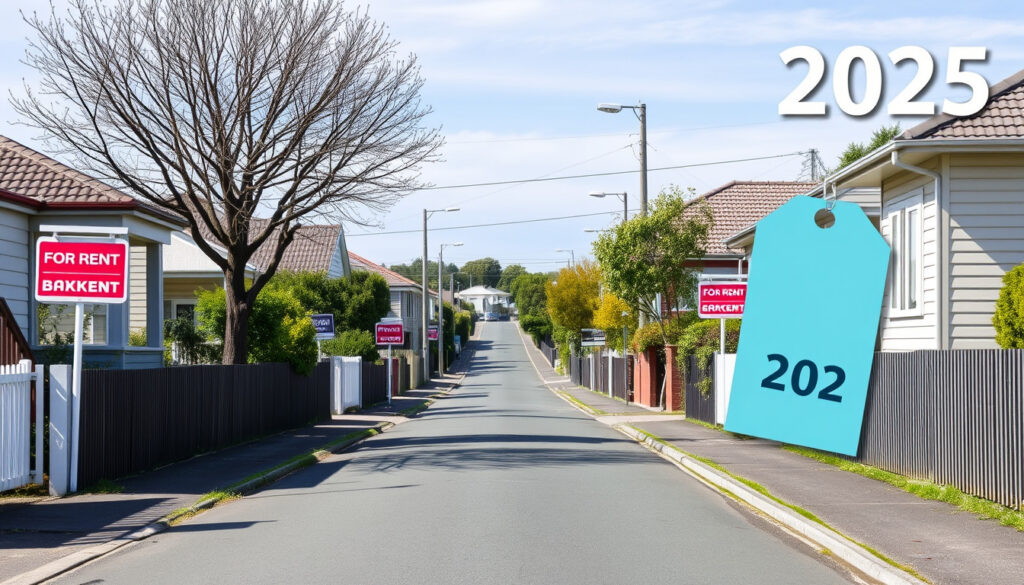
Trade Me Rentals Auckland: Cheap Houses & Average Rent 2025
If you’ve spent any time scrolling through Trade Me for a rental in Auckland, you already know the search can feel like a puzzle. With average weekly rents hovering around $660 and suburbs varying widely, this guide breaks down where the cheapest suburbs are, what’s happening with rent prices, and how to use Trade Me’s tools to your advantage.
Average weekly rent in Auckland (2025): $660 ·
Cheapest Auckland suburb (median): Papakura ($580) ·
Rent trend year-on-year: Down 2% (2024-2025) ·
Trade Me rental listings in Auckland: Over 15,000
Quick snapshot
- Average weekly rent in Auckland is $660 (Trade Me Property)
- Rents dropped 2% year-on-year from 2024 to 2025 (Trade Me Property)
- Cheapest suburbs are in South Auckland, like Papakura ($580) and Manurewa ($590) (Trade Me Property)
- Whether rents will continue to drop through late 2025
- How future interest rate changes might shift the rental market
- 2024 Q1: Auckland median rent peaked at $673 (Trade Me Property)
- 2024 Q4: Rents began to decline (Trade Me Property)
- 2025 Q1: Median rent dropped to $660 (Trade Me Property)
- Further decline expected due to increased rental supply
- Renters should monitor Trade Me listings in South Auckland for deals
The following table summarizes key rental facts for Auckland in 2025.
| Label | Value |
|---|---|
| Average weekly rent in Auckland | $660 |
| Cheapest suburb median rent | $580 (Papakura) |
| Number of Trade Me rental listings | Over 15,000 |
| Year-on-year rent change | -2% |
| Apartment average weekly rent | $580 |
| House average weekly rent | $720 |
| Unit average weekly rent | $640 |
| 5+ bedroom properties monthly change (Jan 2025) | Down 9.2% to $1,080 |
| Rental supply increase year-on-year | Up 5% |
Where is the cheapest place to rent in Auckland?
South Auckland suburbs consistently offer the lowest median rents in the city, making them the go-to for budget-conscious renters. Trade Me’s analysis of the cheapest places to live in New Zealand identified Ōtara, Rui, and Tuakau as affordable options in the Auckland region. Barfoot & Thompson’s suburb-level data for March 2025 reinforces this picture.
Cheapest suburbs for houses
- Papakura — median $580 per week (Barfoot & Thompson)
- Manurewa — median $590 per week
- Otara — median $600 per week
- Glendene — $624 per week for a 3-bedroom (Barfoot & Thompson)
- Glen Eden — $627 per week for a 3-bedroom (Barfoot & Thompson)
- Henderson — $629 per week for a 3-bedroom (Barfoot & Thompson)
Cheapest suburbs for apartments
- Manukau — average $480 per week
- Papakura — average $500 per week
- Otahuhu — average $510 per week
This reinforces that South Auckland offers the most affordable options for renters across both houses and apartments.
How much is the average rent in Auckland?
Auckland’s overall median weekly rent sits at $660 as of early 2025, according to Trade Me’s rental price index (Trade Me Property). But that headline number hides sharp differences depending on property type and location.
Seven property types, one pattern: houses cost the most, apartments cost the least, and the gap is widening.
| Property type | Median weekly rent |
|---|---|
| Apartment | $580 |
| Unit | $640 |
| Townhouse | $700 (down 4.1% in Jan 2025) |
| House | $720 |
| 5+ bedroom | $1,080 (down 9.2%) |
The implication: if you’re flexible on property type, choosing an apartment or unit over a house can save you $80–140 per week.
A renter looking for a 3-bedroom house in central Auckland faces $720/week, while a similar search in Papakura drops to $580. That’s a $7,280 annual saving — enough to cover several months of utilities or a bond.
A renter looking for a 3-bedroom house in central Auckland faces $720/week, while a similar search in Papakura drops to $580. That’s a $7,280 annual saving — enough to cover several months of utilities or a bond.
Are rents going down in Auckland?
Yes — Auckland rents have been on a modest but noticeable downward trend. Trade Me reported a 2% year-on-year decline from 2024 to 2025. The median rent peaked at $673 in Q1 2024 and dropped to $660 by Q1 2025.
Trade Me reported a 2% year-on-year decline from 2024 to 2025 (Trade Me Property).
Recent rent decreases
- 2024 Q1: Median rent peaked at $673
- 2024 Q4: Rents began to decline
- 2025 Q1: Median rent dropped to $660
- January 2025: Townhouse rents down 4.1% month-on-month to $700 (Trade Me Property)
- 5+ bedroom properties fell 9.2% to $1,080 (Trade Me Property)
Reasons for the decline
Increased supply is the main driver. Rental listings on Trade Me grew by roughly 5% year-on-year, while demand held steady. More properties on the market means landlords have to compete harder, which pushes prices down.
This trend gives current renters a strong position to negotiate.
Is renting in Auckland expensive compared to Wellington or the UK?
Auckland rents are higher than Wellington by roughly 15%, making Wellington the more affordable choice among New Zealand’s two biggest cities (Trade Me Property). But how does the comparison stack up internationally?
Three cities, one pattern: Auckland sits in the middle — cheaper than London but pricier than smaller UK cities.
| City | Median weekly rent (approx.) | Relative cost |
|---|---|---|
| Auckland | $660 | Baseline |
| Welington | $570 | 15% cheaper than Auckland |
| London (UK) | £550 ($1,080 NZD) | 64% more expensive than Auckland |
| Manchester (UK) | £250 ($490 NZD) | 26% cheaper than Auckland |
The trade-off: if you’re comparing Auckland to UK cities, the picture is mixed. London is far pricier, but smaller UK cities like Manchester offer significantly lower rents. For renters considering a move, the choice often comes down to job market vs. housing costs.
While Auckland’s rents are falling, they still represent a bigger share of average income compared to Wellington. A renter earning the median salary in Auckland spends about 32% of their income on rent, versus 28% in Wellington.
The affordability gap is narrowing but still significant.
How to find cheap houses for rent in Auckland via Trade Me
Trade Me’s rental platform is the default for most Aucklanders, but knowing how to use its filters can make the difference between an endless scroll and a quick find. With over 15,000 live listings, the key is narrowing your search strategically.
Filtering by price range
- Set the price filter to below $600 per week to target the cheapest 25% of listings
- Use the “Price (low to high)” sort to surface the best deals first
- Save your search to get email alerts — the cheapest places get snapped up fast
Searching by suburb
- Focus on South Auckland suburbs: Papakura, Manurewa, Otara, and Manukau
- West Auckland suburbs like Glen Eden, Henderson, and Glendene also offer decent value
- North Shore suburbs (e.g., Beach Haven at $646/week, Birkdale at $654) are pricier but still below the city average (Barfoot & Thompson)
Private landlord listings
Private landlord listings on Trade Me sometimes offer lower bonds and more flexible terms than agency-managed properties. Look for listings marked “private” or “by owner” — they may also be more open to negotiation on rent or move-in dates.
Private landlords may not use standard Tenancy Services agreements. Always verify the bond is lodged with Tenancy Services within 23 working days, and check the tenancy agreement for any unusual clauses.
Private landlord listings can be a good source for flexible terms.
Is it better to buy or rent in New Zealand?
The rent-versus-buy debate in New Zealand depends heavily on location, interest rates, and your timeline. With interest rates still elevated through early 2025, renting offers more short-term flexibility, while buying builds long-term equity.
Four factors, one pattern: renting wins in the short term, but buying wins if you plan to stay put for more than 7 years.
| Factor | Renting | Buying |
|---|---|---|
| Upfront cost | 4 weeks’ bond + 2 weeks’ rent in advance (~$3,960) | 20% deposit on median house (~$180,000) |
| Monthly cost (Auckland) | $2,860 (rent) | $4,200 (mortgage at 6.5%) |
| Flexibility | High — can move at end of lease | Low — selling costs are high |
| Long-term wealth | No equity built | Equity and potential capital gains |
What this means: for a young professional or couple planning to stay in Auckland for 3-5 years, renting is currently the smarter financial move. The lower monthly cost and flexibility outweigh the equity benefits. But for families or those with a 10-year horizon, buying still holds the edge.
Upsides of renting
- Lower upfront costs — bond vs. deposit
- Flexibility to move for jobs or lifestyle changes
- No maintenance or repair costs
- Current falling rents make it a renter’s market
Downsides of renting
More related posts
 Apple iPhone 16 Pro Max: Price, Specs & Value in Ireland
 Laurie Mains vs Rassie Erasmus Feud: Origin and Renewed War
 Best Pumpkin Soup Recipe Ever – Roasted Vegan Classic
 Convert HEIC to JPG Free – Top Tools and Built-in Methods
 Baltimore Ravens vs Bengals Match Player Stats – 2024 Box Scores & Leaders
 Toyota RAV4 Hybrid Ireland: Price, Problems & Best Year to Buy
 The Talented Mr. Ripley: Themes, Adaptations, and Queer Subtext
 Translate Korean to English – Top Tools and Accuracy Guide