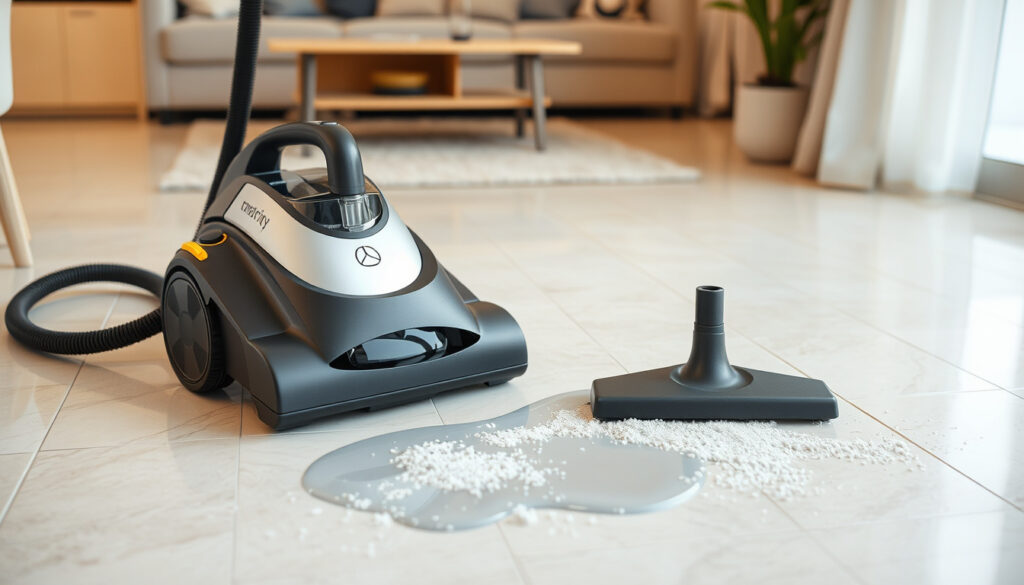
Wet and Dry Vacuum Cleaner Buying Guide: Is It Worth Buying
Anyone who’s tried to mop up a flooded utility room or vacuum sawdust from a workshop knows the frustration of using two separate machines. A wet and dry vacuum cleaner does both jobs in one go, and according to Screwfix Ireland (home improvement retailer), these machines handle dust, debris, and liquid spills from as low as €30. This guide walks through what to look for, how they compare to regular vacuums, and which models suit Irish homes and workshops.
Typical motor type: Bypass motor for wet pickup ·
Common tank capacity: 20 to 75 liters ·
Average power rating: 1000–1500 watts
Quick snapshot
- Bypass motor is required for safe wet pickup (Lowe’s (home improvement retailer))
- Foam or cartridge filter must be used for water (Lowe’s)
- Tank sizes range from 5L to 100L (Kärcher Ireland (cleaning equipment manufacturer))
- Which brand offers the best long-term reliability
- Whether cheap models provide adequate suction for heavy use
- Wet/dry vac adoption growing among Irish car valeting services (Kärcher Ireland)
- More cordless and smart features expected (Dreame (appliance brand))
- Hot water mopping and self-drying cycles becoming standard (Dreame)
- Lie-flat designs for low-clearance furniture (Business Insider (consumer advice outlet))
Six specifications define the wet/dry vacuum category, and one pattern is clear: versatility comes at the cost of complexity in filter choice.
| Specification | Typical value |
|---|---|
| Motor type | Bypass motor (for wet pickup) |
| Tank capacity | 5L to 100L (common: 20–75L) |
| Power rating | 500W to 2000W |
| Weight | 3 kg to 15 kg |
| Price range | €30 to €500 |
| Filter options | Foam, cartridge, HEPA, paper (dry only) |
Is a wet and dry vacuum cleaner worth it?
Cost vs. benefits
- Wet/dry vacuums cost between €30 and €500, replacing both a standard vacuum and a wet mop for spills (Screwfix Ireland).
- They are essential for workshops and garages (Kärcher Ireland).
When to buy a wet/dry vacuum
- If you frequently deal with liquid spills (e.g., flooded basements, car interiors).
- If you need one machine to handle both fine dust and coarse debris.
- If you work in a garage, workshop, or outdoor area where an indoor vacuum would be damaged.
Alternatives to wet/dry vacuums
- Standard canister vacuums (dry only, lower capacity).
- Mop-and-bucket systems (manual effort, no suction).
- Extractor-style wet/dry units (more expensive, professional grade).
The implication: for most Irish users, a mid-range wet/dry vac eliminates the need for a separate mop and shop vac in one purchase.
Which is the best wet and dry vacuum cleaner?
Top rated models
- Tineco S7 Stretch Ultra: Business Insider calls it the best overall, citing its lie-flat design and dirt detection (Business Insider). Expensive but versatile.
- Shark MessMaster: Taste of Home highlights it as lightweight (under 10 lbs) and uses an attached hose for suction (Taste of Home (home & food publisher)).
- BISSELL Crosswave Cordless Max: The Everymom calls it a strong entry-level choice, though the water tank is small (The Everymom (parenting & lifestyle site)).
- Vacmaster (Cleva Ireland): Cleva Ireland markets the range and says it receives five-star reviews from customers and industry experts (Cleva Ireland (Vacmaster distributor)).
Key features to compare
Four models, one trade-off: corded power vs. cordless convenience.
| Model | Best For | Key Feature | Price (approx) |
|---|---|---|---|
| Tineco S7 Stretch Ultra | Whole-home vacuuming and mopping | Lie-flat design, dirt detection | €400+ |
| Shark MessMaster | Quick spot-cleaning of wet and dry messes | Attached hose, lightweight under 4.5 kg | €100-€150 |
| BISSELL Crosswave Cordless Max | Budget entry-level wet/dry | Cordless, versatile, small water tank | €150-€200 |
| Vacmaster (20L model) | Workshop and garage heavy use | Bypass motor, large tank, power take-off | €100-€180 |
Budget vs. premium picks
- Budget (€30-€80): Basic screwfix/retailer-brand models with small tanks and paper filters.
- Mid-range (€80-€200): Most value—includes foam filter, bypass motor, and 20L tank. Suitable for car valeting and home spills.
- Premium (€200+): Cordless, smart features (dirt detection, self-cleaning), high suction, longer runtime. Best for daily use.
Premium cordless models like the Tineco S7 Stretch Ultra offer convenience but require frequent charging and filter maintenance. Mid-range corded models like Vacmaster provide relentless suction and durability at half the price.
The pattern: the best choice depends on whether portability or power matters more for your specific use case.
How do I choose a wet and dry vacuum cleaner?
Determine your primary use
- For home use, compact models around 10–20L are sufficient.
- For workshop or garage, aim for 30L+ with a bypass motor.
- For car valeting, look for portable cordless options with medium tank size.
Consider tank size
- 5-10L: Small apartments, occasional spills.
- 20-30L: Standard home, car cleaning.
- 50-100L: Workshop, industrial use.
Check filter type
- HEPA filters for dry dust; foam or cartridge filter for wet pickup (Lowe’s).
- Bypass motor is essential for safe wet vacuuming.
Evaluate portability and accessories
- Weight: 3 kg (portable) to 15 kg (industrial).
- Accessories: crevice tool, wet nozzle, brush, hose length.
- Cordless vs. corded: cordless offers mobility but shorter runtime (Dreame claims up to 35 minutes on some models) (Dreame).
Choosing the wrong tank size means multiple trips to empty the bin. Choosing the wrong filter means sucking water into the motor and destroying the vacuum. The bypass motor and foam filter pairing isn’t optional—it’s mechanical physics.
What this means: getting the tank size and filter type right from the start prevents costly mistakes down the line.
How do wet dry vacuums compare to regular vacuums?
Motor design differences
- Regular vacuums use a direct motor (air passes through motor).
- Wet/dry vacuums use a bypass motor (air bypasses motor, preventing water damage) (Lowe’s).
Filtration differences
- Regular vacuums often have HEPA filtration (dry only).
- Wet/dry vacuums use foam, cartridge, or paper filters—paper disintegrates when wet.
Versatility and cleaning tasks
- Wet/dry can handle both liquids and solids; regular only dry.
- Wet/dry vacuums are better for heavy debris (wood chips, gravel, wet leaves).
Cost comparison
- Regular upright vacuum: €100-€500.
- Wet/dry vacuum: €30-€500.
- Value: a €100 wet/dry vac replaces two appliances.
The implication: the wet/dry vac is a specialist tool for specific environments, not a replacement for your main household vacuum.
Do you leave the filter in a wet dry vac when vacuuming water?
Importance of the filter for wet pickup
- Do not use a paper filter for water—use a foam sleeve or cartridge filter (Lowe’s).
- Some models have a filter indicator for wet/dry mode.
Step-by-step: vacuuming water safely
- Turn off and unplug the vacuum.
- Remove any paper filter bag—it will disintegrate.
- Install the foam or cartridge filter designed for wet pickup.
- Attach the appropriate nozzle (wide wet nozzle for efficiency).
- Vacuum slowly to avoid overflow.
- Stop when the tank is full; empty immediately to prevent motor damage.
- Rinse the foam filter and air-dry before next use.
When to remove the filter
- If you accidentally used a paper filter for wet pickup, remove it immediately—it will clog and can cause motor burnout.
- Always swap back to the dry filter for dry pickup to maintain suction.
Even with a bypass motor, leaving a wet foam filter installed for dry vacuuming will reduce suction. Change filters between modes—it’s a 10-second step that protects your investment.
The takeaway: filter discipline is the single most important habit for wet/dry vacuum longevity.
Upsides
- Handles both wet and dry messes—replaces two appliances
- Bypass motor protects against water damage
- Wide range of tank sizes (5L to 100L) for any task
- Affordable entry price (€30+) (Screwfix Ireland)
- Essential for garages, workshops, car valeting, and flooded areas
Downsides
- Paper filters disintegrate if used for wet pickup
- Corded models limit range; cordless models have shorter runtime
- Cheap models may lack adequate suction for heavy use
- Foam filters need regular rinsing to prevent odor
- Some models are noisy (80+ dB)
How to Use a Wet/Dry Vacuum Safely
- Read the manual—each model has unique filter and tank instructions.
- For wet pickup: remove paper bag, install foam/cartridge filter, use wet nozzle.
- For dry pickup: use paper filter or HEPA, attach brush or crevice tool.
- Never vacuum flammable liquids (petrol, solvents).
- Empty and clean filter after each wet use to prevent mould.
- Store with the lid slightly ajar to let the tank dry.
What We Know vs. What Remains Unclear
Confirmed facts
- A bypass motor is required for safe wet pickup (Lowe’s).
- Foam or cartridge filter must be used for water (Lowe’s).
- Tank sizes range from 5L to 100L (common: 20–75L) (Kärcher Ireland).
What’s unclear
- Which brand offers the best long-term reliability.
- Whether cheap models (under €50) provide adequate suction for heavy workshop use.
- Real-world battery life of cordless models under continuous wet use.
Expert Perspectives
A wet-dry vacuum is specifically designed to pick up water and other liquids.
Lowe’s (home improvement retailer)
Our buying guide evaluates ease of use for features and accessories when judging wet/dry vacuums.
Kärcher positions its wet and dry vacuum cleaners for garage, cars, garden, and other tasks too tough for an indoor vacuum.
Kärcher Ireland (cleaning equipment manufacturer)
The verdict: a wet/dry vacuum cleaner is not a substitute for a premium carpet vacuum, but it is the only machine that can handle a burst pipe and a sawdust pile in the same day. For Irish homeowners and car valeters, the choice is clear: invest in a mid-range model with a bypass motor and foam filter, or risk damaging a regular vacuum on your first spill.
If a standard vacuum falls short on spills, our detailed wet dry vacuum guide explains the key features to look for.
Frequently asked questions
Can I use a wet/dry vacuum on carpets?
Yes, but only for dry pickup on carpets. For wet carpet cleaning, use a dedicated extractor—wet/dry vacuums lack the pressure and solution dispensing needed for deep carpet washing.
What is the difference between a wet/dry vacuum and a steam cleaner?
A steam cleaner uses hot steam to sanitize and loosen dirt, then typically wipes it away. A wet/dry vacuum uses suction to pick up liquids and solids. They serve different purposes: steam cleaners for sanitizing, wet/dry vacs for spill cleanup.
How often should I clean the filter?
Rinse the foam filter after every wet use to prevent mould. For dry use, tap out the filter every 3-4 uses and wash monthly. Replace paper filters when they appear clogged or torn.
Do wet/dry vacuums work on concrete floors?
Yes—they excel on concrete, tile, and vinyl. Use a squeegee nozzle for wet pickup and a brush attachment for dry debris. They are standard equipment in garages and workshops.
What accessories are included with most models?
Typical accessories: wet nozzle, crevice tool, brush attachment, foam filter, paper filter, hose, and sometimes a floor squeegee. Check the box before buying—budget models may include fewer items.
Is a wet/dry vacuum suitable for pet hair?
Yes, especially with a brush attachment. The large tank capacity means fewer stops to empty. However, pet hair can wrap around the brush—use a crevice tool for corners and upholstery.
How do I store a wet/dry vacuum after use?
Empty the tank, rinse and dry the filter, and leave the lid slightly open to allow airflow. Store in a dry area to prevent mould growth inside the tank.
If you’re ready to buy, check local stock at Harvey Norman near you in Ireland or browse selection at Mitre 10 Mega Ferrymead—both retailers carry Kärcher, Vacmaster, and other wet/dry vacuum models.
More related posts
 A Nightmare on Elm Street: Facts and Banned Sequel
 Sunbeam Electric Blanket NZ: Reviews, Safety & Buying Guide
 Mobile Mechanic Near Me: Costs & Guide (Ireland 2026)
 How Much Is Netflix Per Month? 2025 Plans & Pricing
 All Blacks vs Wallabies 2019: Record 47-26 Win in Bledisloe Cup
 iPhone 17 Pro Case – Top NZ Retailers and MagSafe Options
 What Generation Am I? Find Your Generation by Birth Year