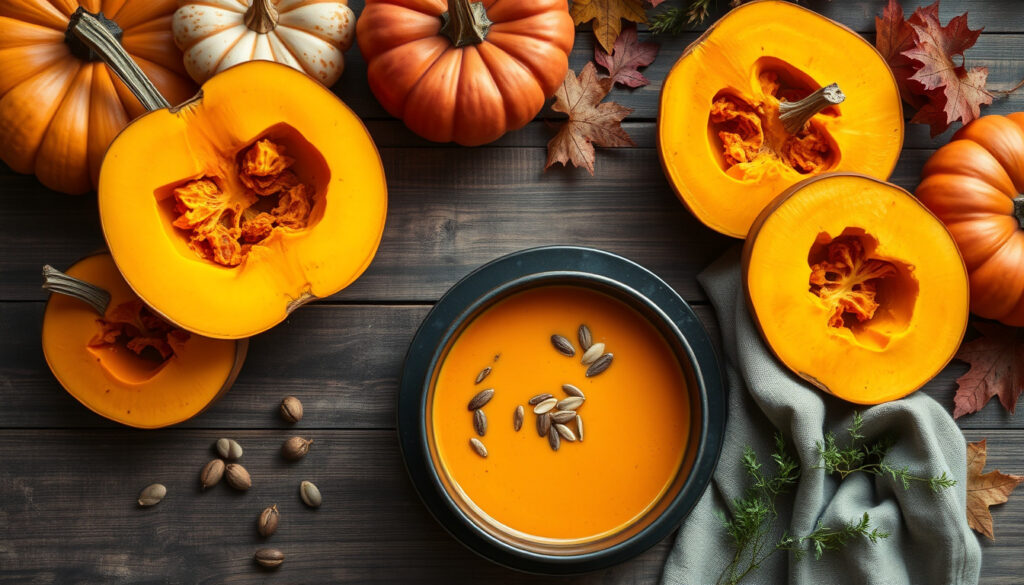
Best Pumpkin Soup Recipe Ever – Roasted Vegan Classic
The Best Pumpkin Soup Recipe Ever
When autumn arrives, few dishes capture the season quite like a perfectly crafted bowl of pumpkin soup. This recipe delivers exceptional flavor through a simple technique that transforms humble ingredients into something memorable. The method focuses on roasting rather than boiling, which concentrates the pumpkin’s natural sweetness and creates a depth that distinguishes this version from more basic preparations.
The appeal of this dish extends beyond taste. Pumpkin brings impressive nutritional value to the table, offering substantial amounts of vitamin A, vitamin C, and dietary fiber while remaining naturally low in calories. Whether following a vegan lifestyle, managing carbohydrate intake, or simply seeking comfort food that does not weigh heavily on the system, this soup adapts readily to various dietary needs without sacrificing satisfaction.
What Makes This the Best Pumpkin Soup Recipe?
Several elements distinguish an ordinary pumpkin soup from an exceptional one. The foundation lies in selecting the right pumpkin variety and applying proper cooking techniques that maximize flavor development.
At a Glance
Key Elements for Success
- Roasting first: Baking the pumpkin rather than boiling preserves and intensifies its natural sugars, creating richer flavor
- Coconut milk base: Provides creaminess without dairy while adding healthy fats that enhance satiety
- Fresh herbs: Sage, thyme, and rosemary add aromatic complexity that dried alternatives cannot match
- Proper blending: Using a high-speed blender ensures silky smoothness rather than grainy texture
- Hokkaido variety: This pumpkin type requires no peeling since the skin softens completely during cooking
- Balanced seasoning: A combination of salt, pepper, and warm spices like nutmeg or cinnamon rounds out the flavor profile
Nutrition Snapshot
| Nutrient | Per Serving |
|---|---|
| Calories | 150 |
| Carbohydrates | 20g |
| Protein | 3g |
| Dietary Fiber | 4g |
| Vitamin A | 245% Daily Value |
| Vitamin C | 15% Daily Value |
What Ingredients Do You Need for Pumpkin Soup?
The ingredient list stays straightforward, typically requiring fewer than ten components. This accessibility makes the recipe approachable for cooks of all experience levels while allowing quality ingredients to shine through.
Core Components
The star ingredient, pumpkin, forms the bulk of the soup. Approximately 600g of cubed Hokkaido pumpkin provides the right base for four servings, though larger quantities scale easily. Yellow onion and garlic contribute savory depth, with three cloves of garlic and 100g of onion serving as typical proportions for the base recipe.
For the liquid component, vegetable broth serves as the foundation. Around 500-600ml creates the desired consistency, though adjustments depend on preferred thickness. The creamy element comes from half a cup of full-fat coconut milk, which adds richness while keeping the recipe entirely plant-based.
Seasonings and Flavor Enhancers
Olive oil, approximately two tablespoons, provides the cooking medium for sautéing aromatics. Sea salt, roughly three-quarters of a teaspoon, seasons the base while black pepper adds a subtle kick at about one-eighth teaspoon. Fresh or dried herbs such as marjoram, thyme, and oregano contribute aromatic complexity, with two teaspoons of dried herbs or a tablespoon of fresh equivalents working well.
Optional additions include nutritional yeast for umami depth, a tablespoon proving sufficient, and lemon juice at half a tablespoon to brighten flavors. For those seeking a hint of sweetness, two tablespoons of maple syrup or honey balance the earthiness of the pumpkin.
Hokkaido pumpkin stands out for its thin skin, which becomes tender during cooking and eliminates the need for peeling. Other varieties like sugar pumpkins work equally well but require removal of the outer skin before use.
How Do You Make Pumpkin Soup Step by Step?
The preparation process follows a straightforward sequence: roast the vegetables, simmer the components together, and blend until silky smooth. This method produces consistently superior results compared to approaches that skip the roasting step.
Preparing the Pumpkin
Begin by preheating the oven to approximately 400°F (200°C). Cube the pumpkin into roughly one-inch pieces, keeping the skin intact if using Hokkaido variety. Chop the onion into similar-sized pieces and leave the garlic cloves whole or lightly crushed. Toss these vegetables with olive oil, salt, pepper, and herbs, spreading them evenly on a baking sheet.
Roast for 35 minutes, turning halfway through, until the pumpkin edges caramelize and the flesh becomes tender. This step proves essential—skipping it results in a flatter, less complex flavor profile that fails to reach the soup’s full potential.
Building the Soup
Once roasted, transfer the vegetables to a large pot or Dutch oven. Add the vegetable broth, starting with the lower amount and adjusting as needed. Bring the mixture to a gentle simmer over medium heat, allowing the flavors to meld for several minutes.
Stir in the coconut milk and any sweeteners or additional seasonings. Remove from heat and allow the mixture to cool slightly before blending, as hot liquids create pressure that may cause splattering when processed.
Blending to Perfection
For the smoothest texture, use a high-speed blender, processing the soup in batches if necessary. An immersion blender offers convenience and eliminates transfer risks, though the result may be slightly less uniform. Continue blending until the texture reaches desired smoothness, typically one to two minutes in a standing blender.
Taste and adjust seasoning, adding salt, pepper, or additional herbs as needed. The soup thickens slightly upon standing, so thin with extra broth if necessary when serving.
Allow the soup to cool for at least ten minutes before blending. This prevents pressure buildup in sealed containers and reduces the risk of burns from hot liquid splashing.
What Are Tips for the Perfect Pumpkin Soup?
Even experienced cooks encounter challenges when preparing pumpkin soup. Understanding common pitfalls and how to avoid them ensures consistent success.
Avoiding Common Mistakes
Skipping the roasting step represents the most frequent error. While boiling pumpkin produces tender flesh, it dilutes the natural sugars and produces a watery result lacking the caramelized notes that roasting develops. The Maillard reaction during roasting creates hundreds of flavor compounds that simply cannot develop through moist heat methods alone.
Overfilling the blender causes messy splatter and potentially dangerous pressure buildup. Always fill blenders to no more than half capacity when processing hot liquids, and blend in batches if needed for larger quantities.
Achieving the proper thickness requires attention during both cooking and blending. If the soup turns out thinner than desired, return it to the pot and simmer uncovered to reduce excess moisture. Alternatively, blend in additional roasted vegetable pieces or add a quarter teaspoon of xanthan gum for instant thickening without altering flavor.
Storage Guidelines
The finished soup keeps well in the refrigerator for three to five days when stored in an airtight container. Reheat gently on the stovetop over medium-low heat, stirring occasionally to prevent sticking. The microwave works for single servings but may create uneven heating in larger portions.
For longer preservation, freeze the soup in portion-sized containers for up to three months. Thaw overnight in the refrigerator and reheat as normal. The texture may shift slightly after freezing, so reblending upon reheating restores smoothness.
How to Adapt the Recipe for Different Diets
The base recipe adapts readily to accommodate various dietary preferences and restrictions. These modifications maintain the soup’s integrity while meeting specific nutritional requirements.
Vegan Modifications
The standard version using coconut milk and vegetable broth qualifies as vegan without any changes. For those seeking lower fat content, additional vegetable broth achieves a lighter consistency. Nutritional yeast or hulled hemp seeds add protein and create a thicker mouthfeel without dairy products. A popular vegan keto version incorporates hemp seeds and nutritional yeast to boost fat and protein content while keeping carbohydrates minimal.
Keto and Low-Carb Adaptations
Reducing carbohydrates requires limiting higher-sugar additions like maple syrup and minimizing onion content. Adding cauliflower provides bulk and body while contributing minimal carbs. Cauliflower roasted alongside the pumpkin, then blended in, creates a hearty texture that satisfies without the carbohydrate load. Xanthan gum serves as an effective thickener that adds no carbs whatsoever.
Keeping net carbohydrates below ten grams per serving becomes achievable through these adjustments, making the soup suitable for strict ketogenic eating plans.
Nutritional values vary based on specific ingredients and portion sizes. Those with precise macronutrient targets should calculate based on their actual recipe measurements rather than relying on estimates.
Step-by-Step Timeline
The complete preparation follows a predictable sequence from start to finish. Total active time spans approximately 15 minutes, with an additional 30 minutes of cooking time for a combined effort of 45 minutes.
- Prepare vegetables (10 minutes): Cube the pumpkin, chop the onion, and measure all remaining ingredients.
- Roast the base (35 minutes): Spread vegetables on a baking sheet and roast at 400°F until tender and caramelized.
- Simmer components (10 minutes): Transfer roasted vegetables to a pot, add broth and seasonings, and simmer gently.
- Blend until smooth (5 minutes): Process the soup in batches until reaching desired texture.
- Adjust and serve (5 minutes): Taste, adjust seasonings, garnish with pepitas or herbs, and serve immediately.
What Remains Uncertain About This Recipe
While the core technique produces reliable results, certain aspects vary based on individual circumstances and ingredient quality.
| Established Information | Variable Factors |
|---|---|
| Roasting develops superior flavor compared to boiling | Pumpkin sugar content varies by variety and ripeness |
| Hokkaido skin becomes tender during cooking | Actual sweetness depends on individual pumpkin |
| Coconut milk provides consistent creaminess | Blender types produce different textures |
| Storage lasts 3-5 days refrigerated | Optimal serving temperature varies by preference |
| Freezing preserves quality for up to 3 months | Texture changes after freezing differ by individual |
Why Pumpkin Soup Endures as a Fall Classic
Pumpkin soup traces its heritage to harvest traditions where squash and gourd varieties formed staple provisions through colder months. The abundance of autumn pumpkins made them natural candidates for preservation and creative preparation. Contemporary appreciation for seasonal, locally-sourced ingredients has renewed interest in dishes that honor these traditions.
The recipe aligns well with current culinary trends emphasizing whole-food ingredients, flexible preparation methods, and dietary inclusivity. Search interest in pumpkin soup peaks annually during fall months, reflecting its strong association with seasonal eating occasions and holiday gatherings.
Additional Perspectives
Roasting intensifies the natural sweetness of pumpkin and creates depth that cannot be achieved through boiling alone. This technique separates an ordinary soup from something truly memorable.
Nutrition science confirms pumpkin’s value as a functional food. A single cup of plain pumpkin provides only 25 to 50 calories while delivering over 200 percent of the daily recommended vitamin A intake in the form of beta-carotene. This nutrient supports eye health, immune function, and cellular communication throughout the body.
The fiber content proves equally significant. Pumpkin flesh contains both soluble and insoluble fiber, supporting digestive health and promoting feelings of fullness that aid in weight management efforts. Combined with the soup’s high water content, these elements create a satisfying dish that satisfies hunger without excess calories.
Moving Forward with Your Pumpkin Soup
This recipe serves as a foundation rather than a limitation. Countless variations exist within the broader category of pumpkin soups, each offering unique interpretations of the core technique. Adding curry powder transforms the flavor profile entirely, while stirring in toasted pepitas provides textural contrast and added protein.
Serving suggestions extend beyond the bowl itself. Crusty bread for dipping, a side salad for balance, or roasted vegetables for doubling down on autumn flavors all complement the soup beautifully. Those exploring similar preparations might appreciate discovering the Roasted Low Carb Keto Pumpkin Soup for a lower-carbohydrate alternative or the Creamy Roasted Vegan Pumpkin Soup from another perspective on the same technique.
Frequently Asked Questions
Can I use canned pumpkin instead of fresh?
Yes, canned pumpkin puree works in place of fresh, though the roasting step should be skipped. Simply combine the canned pumpkin with broth and other ingredients, then simmer briefly before blending. The flavor will be slightly milder than the roasted version.
What pumpkin varieties work best?
Sugar pumpkins, also called pie pumpkins, provide the sweetest flesh for soup. Hokkaido pumpkins offer convenience since their thin skin becomes tender during cooking. Butternut squash serves as a viable substitute if pumpkin is unavailable.
How can I make the soup thicker?
Simmer the soup uncovered to reduce liquid content, add more roasted vegetables, or incorporate a quarter teaspoon of xanthan gum while blending. Reducing the broth quantity at the start also produces a thicker result.
Is this soup suitable for meal prep?
The soup stores exceptionally well for meal prep purposes. Portion it into individual containers after cooling and refrigerate for up to five days or freeze for longer storage. Reheat single portions as needed throughout the week.
How do I make it spicier?
Add cayenne pepper, paprika, or diced fresh chili peppers to the soup. Starting with an eighth teaspoon of cayenne provides noticeable heat without overwhelming the other flavors. Adjust according to personal preference and heat tolerance.
Can I make this in an Instant Pot?
While the recipe focuses on oven roasting, an Instant Pot can accommodate the technique. Roast the pumpkin separately first, then pressure cook with broth for five minutes. This approach saves time but produces a slightly different flavor profile than full oven roasting.
More related posts
 What Does AM and PM Mean – Origins, Confusions and History
 Cashier’s Check: Definition, How to Get One, and Risks Explained
 Things to Do in Napier: Art Deco, Free Attractions & Day Trip
 Why Was Norflex Discontinued? Safety, Risks & Alternatives
 Daffodil Day 2026 Ireland: Date & How to Help
 Cheapest Exterior Cladding NZ: 5 Budget Options Compared
 What Time Do the All Blacks Play? Fixtures & Times
 What Is Heavy Cream? Definition, UK Name, Substitutes & Uses