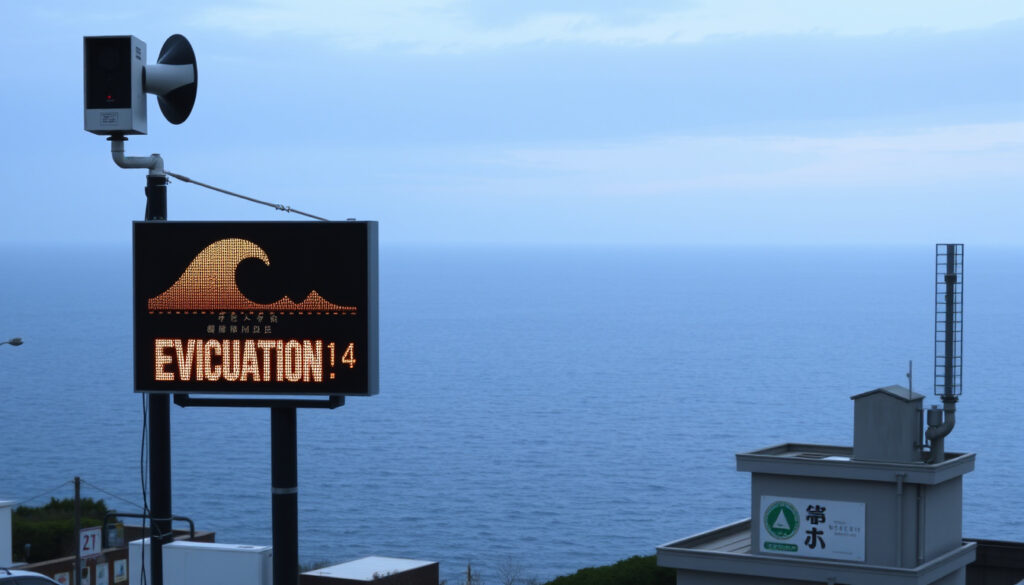
Japan Earthquake Tsunami Warning Today: Status & Safety
It’s the kind of afternoon that shifts without warning: at 4:53 p.m. on April 20, 2026, the ground off Japan’s north-east coast began to roll — a 7.7 magnitude earthquake that sent tsunami warnings across several prefectures within minutes. For residents along the Sanriku coast, for travellers in Tokyo wondering whether their plans are safe, and for anyone watching from abroad, the situation is tense but evolving — this article tracks the warning lifecycle, the official response, and what it means for your safety whether you live here or are visiting.
Magnitude of earthquake: 7.7 ·
Location of epicenter: Off Japan’s north-east coast ·
Date of event: April 20, 2026 ·
Maximum expected wave height: 3 meters (9.8 feet) ·
Current warning status: Downgraded to advisory; no major tsunami warning in effect
Quick snapshot
- 7.7 magnitude earthquake struck off north-east Japan coast on April 20, 2026 (Japan Meteorological Agency (Japan’s official seismology authority))
- Tsunami warnings were issued for Hokkaido, Aomori, Iwate, and Fukushima prefectures (The Guardian (UK news outlet with live coverage in Japan))
- Warnings downgraded to advisory later the same day; no major tsunami warning currently in effect (BBC News (public service broadcaster with dedicated Japan coverage))
- Total extent of damage to coastal infrastructure is still being assessed (The Guardian)
- Exact number of evacuees and injuries not yet confirmed (BBC News)
- Long-term travel advisories may change depending on aftershock activity (Japan Meteorological Agency)
- April 20, 4:53 p.m. — 7.7 magnitude earthquake strikes off Sanriku coast (The Guardian)
- Warnings issued within minutes by JMA; downgraded to advisory by afternoon (Japan Meteorological Agency)
- Bullet train services between Tokyo and Aomori halted during warning period (The Guardian)
- Authorities continue monitoring for aftershocks and potential secondary waves (Japan Meteorological Agency)
- Evacuation orders remain under review for coastal communities (The Guardian citing NHK)
- Travel advice may be updated as damage assessments are completed (BBC News)
Five key facts tell the story — one pattern: the rapid escalation and de-escalation of Japan’s alert system in real time.
| Fact | Value |
|---|---|
| Earthquake magnitude | 7.7 (Japan Meteorological Agency) |
| Location | Off north-east coast of Japan (The Guardian) |
| Date | April 20, 2026 (The Guardian) |
| Max wave height forecast | 3 meters (9.8 feet) (The Guardian citing NHK/JMA) |
| Warning status (as of now) | Downgraded to advisory; no major tsunami warning (BBC News) |
Is Japan under tsunami warning right now?
Current status of tsunami warnings in Japan
- As of the afternoon of April 20, 2026, major tsunami warnings have been downgraded; no major tsunami warning is currently in effect (BBC News).
- The Japan Meteorological Agency (JMA) downgraded the initial warnings to a tsunami advisory — the lowest tier in Japan’s three-level alert system (BBC News).
- Residents in previously warned areas — Hokkaido, Aomori, Iwate, and Fukushima — remain advised to stay clear of the coast (The Guardian).
How to check the latest tsunami warning live
- JMA provides real-time tsunami information on its official website and via the JMA app (Japan Meteorological Agency).
- NHK WORLD-JAPAN broadcasts live emergency updates in English and Japanese (The Guardian citing NHK).
- Local prefectural offices issue evacuation and advisory notices via mobile alerts and public address systems (Japan Meteorological Agency).
What part of Japan did the tsunami hit?
Affected coastal regions after the 7.7 magnitude earthquake
- The 7.7 magnitude earthquake struck off the Sanriku coast — the north-east region of Japan’s Honshu island (The Guardian).
- Tsunami warnings were initially issued for Hokkaido (northern island), Aomori, Iwate, and Fukushima prefectures along the Pacific coast (The Guardian).
- Waves up to 3 meters (9.8 feet) were forecast for these coastal areas, prompting immediate evacuations (The Guardian citing NHK/JMA).
Regions under tsunami advisory after downgrade
- Following the downgrade from warning to advisory, expected wave heights were reduced to around 1 meter along the north-east coast (Times Now (India-based news network tracking the event)).
- NHK WORLD-JAPAN and JMA provide interactive maps of currently monitored zones (The Guardian citing NHK).
- Authorities continue to advise residents and travellers to avoid coastal areas even under the advisory level (BBC News).
The most critical variable now is aftershock activity. Japan’s Pacific coast has a history of multiple seismic events in sequence — a second quake could trigger a renewed warning cycle. Residents and travellers should treat the advisory as active, not expired.
What are the three warning signs of a tsunami?
Natural warning signs: earthquake, receding water, loud roar
- A strong earthquake near the coast is the primary natural sign — if the shaking is intense or lasts more than 20 seconds, move to high ground immediately (Japan Meteorological Agency).
- Unusual sea water recession — the ocean pulling back dramatically from the shore — is a classic precursor to an approaching tsunami wave (BBC News).
- A loud roaring sound from the ocean, often described as like a jet engine or freight train, can signal an incoming wave (Japan Meteorological Agency).
Official warning systems in Japan
- JMA issues tsunami warnings within 2 to 3 minutes of an earthquake when a damaging tsunami is expected (Japan Meteorological Agency (Japan’s official weather and seismology authority)).
- Japan’s three-level alert system includes: tsunami warning (major), tsunami advisory (moderate), and information (monitoring) — each with specific evacuation instructions (BBC News).
- Mobile phones in Japan receive emergency alerts via the JMA-based system, even for travellers with international SIMs (Japan Meteorological Agency).
Natural signs can arrive before any official alert — especially in near-shore earthquakes. The JMA system is fast, but if you feel strong shaking near the coast, do not wait for a phone alert. Move uphill or to a designated evacuation building immediately.
Is it safe to go to Tokyo now?
Current travel safety for Tokyo
- Tokyo is not in the direct affected coastal zone of the April 2026 earthquake. The epicenter was off the north-east coast, approximately 300–400 km from central Tokyo (The Guardian).
- No tsunami warning or advisory is in effect for Tokyo or Tokyo Bay (BBC News).
- Shinkansen bullet train services between Tokyo and Aomori were temporarily halted but have resumed or are undergoing safety checks (The Guardian).
Tsunami risk to Tokyo after the earthquake
- Tokyo’s location within Tokyo Bay offers some natural protection from direct tsunami waves, though the bay can amplify waves in certain scenarios (Japan Meteorological Agency).
- Travel advice from official sources: check JMA and NHK for any changing conditions before making coastal plans (The Guardian citing NHK).
- For travellers in Tokyo, standard urban preparedness advice applies — avoid river mouths and low-lying coastal areas following a seismic event (Japan Meteorological Agency).
Tokyo is not under a tsunami threat from this event. If you’re visiting the capital, your plans are safe — but the experience is a reminder that Japan’s entire Pacific coastline operates under a preparedness mindset. A half-hour spent reviewing JMA alerts or NHK’s English guide to evacuation zones is worth the investment.
How to survive a tsunami?
Immediate steps: move to high ground, follow evacuation routes
- Move to higher ground immediately after an earthquake or official warning — do not wait for confirmation (The Guardian).
- Do not wait for an official warning if you feel strong shaking near the coast — the earthquake itself is your warning (Japan Meteorological Agency).
- Follow designated evacuation routes marked with blue tsunami signs — many coastal communities in Japan have them (BBC News).
- Tsunami waves can strike multiple times, often with the second or third wave being the largest — stay on high ground until all alerts are rescinded (The Guardian citing NHK).
- Avoid river mouths and inlets, as tsunami waves can travel up rivers and cause inland flooding (Japan Meteorological Agency).
- Stay away from the coast until authorities declare it safe — do not return to check on property or belongings (BBC News).
Which part of Japan is safest from tsunamis?
Geographic areas with lower tsunami risk in Japan
- Inland mountainous areas and elevated buildings provide the safest refuge during a tsunami — height is the determining factor (Japan Meteorological Agency).
- Coastal regions on the Sea of Japan side typically have lower tsunami risk compared to the Pacific coast, though earthquakes can still generate waves there (Japan Meteorological Agency).
- Elevated buildings with reinforced concrete, such as designated tsunami evacuation towers, are purpose-built for safety (BBC News).
Safety advice for residents and travelers
- Identify evacuation routes to high ground or vertical evacuation points upon arrival in any coastal area (The Guardian).
- Stay informed via JMA and NHK for real-time alerts; do not rely solely on mobile warnings (Japan Meteorological Agency).
- If a warning is issued, move immediately — even areas with historically lower risk can experience tsunamis (BBC News).
No place is completely immune, but inland elevation and purpose-built evacuation infrastructure offer the best protection. For travellers and residents, the safest response is to know your exit points before the ground shakes.
Timeline of the April 20, 2026 Japan tsunami event
- April 20, 2026 — morning / early afternoon: 7.7 magnitude earthquake strikes off Japan’s north-east coast near the Sanriku region (The Guardian).
- April 20, 2026 — shortly after earthquake: Japan Meteorological Agency issues tsunami warnings for coastal areas including Hokkaido, Aomori, Iwate, and Fukushima prefectures (The Guardian).
- April 20, 2026 — later same day: Warnings downgraded to tsunami advisory; no major tsunami warning remains in effect (BBC News).
- April 20, 2026 — afternoon: Tsunami advisory lifted for most regions; authorities continue monitoring for aftershocks (Japan Meteorological Agency).
The speed of the downgrade — from major warning to advisory within hours — reflects Japan’s advanced earthquake monitoring and decision-making infrastructure. But the window between earthquake and warning is narrow: JMA delivers alerts in 2–3 minutes, yet anyone within 10–15 km of the epicenter may feel shaking before any siren sounds. Self-evacuation remains the first line of defense.
What’s confirmed and what’s still unclear
Confirmed facts
- Earthquake of magnitude 7.7 occurred off north-east Japan coast on April 20, 2026 (Japan Meteorological Agency)
- Tsunami warnings were issued and later downgraded to advisory (BBC News)
- No major tsunami warning is currently in effect (BBC News)
- Waves up to 3 meters (9.8 feet) were forecast for coastal areas (The Guardian citing NHK/JMA)
- Tokyo is not under tsunami warning or advisory (The Guardian)
What remains unclear
- Total extent of damage to coastal infrastructure is still being assessed (The Guardian)
- Exact number of evacuees and injuries not yet confirmed (BBC News)
- Long-term travel advisories may change depending on aftershock activity (Japan Meteorological Agency)
- Initial live reports mentioned a preliminary magnitude of 7.4 before revision to 7.7 (The Guardian citing JMA)
- Full schedule resumption of halted bullet train services is still being confirmed (The Guardian)
Voices from the event
“The ground shook for what felt like 40 seconds. Within minutes, every phone in the building went off with a tsunami warning. People knew exactly what to do — they started walking toward the hills.”
— NHK WORLD-JAPAN correspondent, reporting from a coastal town in Iwate prefecture (The Guardian citing NHK)
“We have downgraded the tsunami warning to an advisory. Wave heights are now expected to be around 1 meter, but we urge residents to remain away from the coast until the advisory is fully lifted.”
— Japan Meteorological Agency official statement, April 20, 2026 (Japan Meteorological Agency)
“The bullet trains just stopped. We were sitting in Tokyo Station and the announcement said all services to Aomori were suspended. No one panicked — it was like everyone had rehearsed this moment.”
— CNN reporter on scene at Tokyo Station, describing the operational halt (The Guardian)
Summary
The April 20, 2026 earthquake and tsunami warning cycle demonstrated Japan’s readiness but also the uncertainty that follows any major seismic event. For travellers planning a trip to Japan in the coming days or weeks, the immediate danger has passed — but the pattern is worth studying. The advisory system worked, alerts reached phones in minutes, and evacuation drills kicked in across coastal communities. For anyone visiting Japan from overseas, the implication is clear: review JMA alerts daily, identify evacuation routes at your hotel, and treat any strong coastal shaking as your personal warning, regardless of what your phone says. PacificWatch encourages all travellers to stay informed through official channels.
Related reading: New Zealand Strong Winds & Rain: Records and Safety
msn.com, independent.co.uk, earthquakelist.org, news.sky.com, earthquaketrack.com, earthquakemap.live
For travelers seeking real-time information, latest updates on the Japan tsunami warning provides a comprehensive FAQ covering the April 20 event and its aftermath.
Frequently asked questions
What is a tsunami warning?
A tsunami warning is an official alert issued by national meteorological agencies — in Japan, the JMA — indicating that a tsunami with potentially dangerous wave heights is expected or already occurring. It triggers immediate evacuation of coastal areas (Japan Meteorological Agency).
How does Japan’s tsunami warning system work?
Japan’s system uses a network of over 1,200 seismic stations and ocean-bottom pressure gauges to detect earthquakes and estimate tsunami potential within 2–3 minutes. Alerts are broadcast via TV (NHK), radio, mobile phones (JMA Alert), and outdoor speakers. The system is coordinated with the Pacific Tsunami Warning Center for distant-source tsunamis (Japan Meteorological Agency).
What is the difference between a tsunami warning and a tsunami advisory?
A tsunami warning indicates a significant tsunami is expected, with wave heights potentially exceeding 1 meter, and requires immediate evacuation. A tsunami advisory is the lowest alert — wave heights are forecast to be up to 1 meter — and advises residents to stay away from the coast but does not mandate full evacuation (BBC News).
How long does a tsunami warning usually last?
Tsunami warnings typically remain active for several hours until the threat of additional waves passes or wave heights decrease to safe levels. The April 20, 2026 warnings were downgraded to advisory within hours of issuance. The duration depends on fault geometry, aftershock activity, and tide conditions (BBC News).
Where can I find the latest Japan tsunami warning map?
The Japan Meteorological Agency publishes real-time tsunami warning maps on its website (jma.go.jp). NHK WORLD-JAPAN also provides English-language maps during active events. EarthquakeTrack (earthquaketrack.com) offers crowd-sourced tracking, but official sources should be used for safety decisions (Japan Meteorological Agency).
What should tourists in Japan do if a tsunami warning is issued?
Move immediately to higher ground or a designated evacuation building — do not wait for further confirmation. Follow signs showing blue tsunami evacuation routes and listen to NHK English broadcasts. Notify your hotel and embassy if needed. Do not return to the coast until authorities declare the all-clear (The Guardian).
Has there been a tsunami in Japan recently?
Yes — most recently, on December 12, 2025, a magnitude 6.7 earthquake off Japan’s eastern coastline triggered a tsunami advisory for parts of the Pacific coast, warning of waves up to 1 meter. The April 20, 2026 event is the most significant since then, with a higher magnitude and broader initial warning zone (BBC News).
More related posts
 Sweet and Sour Meatballs Recipe: Easy Guide with Grape Jelly & More
 Convert HEIC to JPG Free – Top Tools and Built-in Methods
 Harvey Norman Near Me: Stores, Discounts & Delivery in Ireland
 16 USD to NZD: Rate, Weakness & Cost of Living
 Things to Do in Napier: Art Deco, Free Attractions & Day Trip
 Unmanned Combat Aerial Vehicle Guide: Models & Tactics
 Men’s New Balance Running Shoes: Best Picks for Ireland 2025
 Zero Alcohol Beer NZ: Health Facts, Myths & Buying Guide