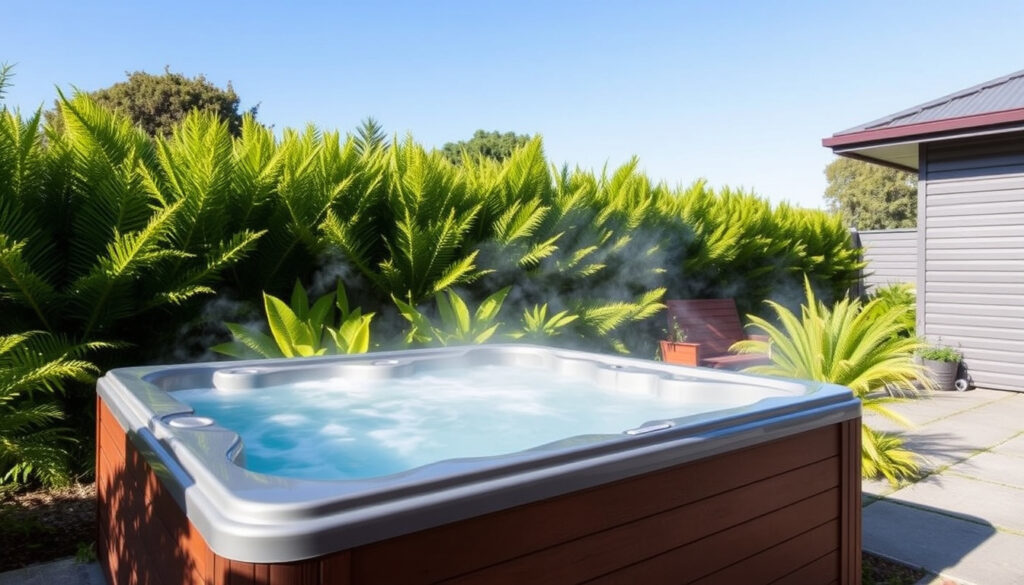
Spa Pool New Zealand 2025: Prices, Costs & Rules
If you’ve been pricing spa pools online, you already know the sticker shock isn’t the full story. A spa pool is a long-term investment — purchase price, running costs, installation, and regulations all add up. This guide lays out the actual numbers and rules, using verified data from NZ retailers, councils, and regulators, so you can decide what really fits your budget and backyard.
Average purchase price (NZ$): 8,000 – 15,000 for a 4-person model ·
Typical monthly running cost: $30 – $50 in electricity ·
Average lifespan: 10 – 15 years with proper maintenance ·
Energy-efficient models running cost: From ~$1 per day (Hot Spring Spas) ·
Share of NZ households with a spa pool: Approximately 8% (estimated)
Quick snapshot
- Average purchase price for a 4-person spa pool: NZ$8,000–15,000 (Alpine Spas (NZ manufacturer))
- Running cost (electricity): NZ$30–50/month typical (Consumer NZ (independent test lab))
- From 2025, all new spa pools must have a lockable cover (AS 1926.3) (Kāpiti Coast District Council (local authority))
- Fencing required if water depth > 400mm (Building Act 2004) (Alpine Spas (NZ manufacturer))
- Top-rated brands: Alpine Spas and Hot Spring Spas (NZ owner forums) (Alpine Spas (NZ manufacturer))
- Exact proportion of NZ households with a spa pool: estimates range 5–10%
- Council consent requirements vary across territorial authorities
- True daily running cost for older (pre-2015) models: not well documented
- Some retailers claim $1/day running cost, but this is not universally verified
- Electrical amperage requirements vary by model; no single standard for installation
- 2004 – Building Act amendments classify spa pools under fencing regulations
- 2022 – AS 1926.3 updated with lockable cover requirements proposed
- January 2025 – Mandatory lockable cover standard takes effect for all new spa pools sold in NZ
- Ongoing – Energy-efficient models (Alpine Eco, Hot Spring Highlife) claim sub-$1/day running costs
- Check with your local council before buying – consent rules differ
- Factor in installation costs: $500–$2,000 for site prep and electrical
- Compare energy labels to avoid surprise winter bills
- Budget $120–$240/year for chemicals and test strips
| Metric | Value |
|---|---|
| Average purchase price (4-person) | NZ$ 8,000 – 15,000 |
| Monthly running cost (electricity) | NZ$ 30 – 50 |
| Annual chemical cost | NZ$ 120 – 240 |
| Typical lifespan | 10 – 15 years |
| Energy-efficient models running cost (per day) | From NZ$ 0.85 – 1.50 |
| Fencing required if water depth > 400mm | Yes, compliant fence or lockable cover |
How much does a spa pool cost in NZ?
Four tiers cover the NZ market, from basic plug-and-play units to full swim spas. The price you pay depends on size, insulation, brand, and included extras like lighting or audio.
Entry-level spa pool prices (NZ$ 5,000 – 8,000)
- Basic 2–4 person models from budget brands. Entry-level spa pools in New Zealand are advertised from about NZ$4,995 to NZ$8,000 (Alpine Spas (NZ manufacturer)).
- Usually fewer jets, no built-in audio, and less insulation.
Mid-range spa pool prices (NZ$ 8,000 – 15,000)
- 4–6 person models with better insulation, more jets, and LED lighting. Mid-range family spa pools are advertised from about NZ$6,495 to NZ$14,000 (Alpine Spas (NZ manufacturer)).
- Most buyers end up in this band.
Premium and swim spa prices (NZ$ 15,000 – 30,000+)
- High-end brands (Hot Spring, Jacuzzi, Bullfrog) with advanced filtration, multiple pump systems, and swim-current options. Premium spa pools and Bullfrog Spas are advertised from about NZ$27,995 and up (Alpine Spas (NZ manufacturer)).
- Swim spas typically start at NZ$20,000 and can reach NZ$40,000+.
Additional costs: delivery, installation, foundation
- Delivery: often included for local areas, but remote locations may add $200–$500.
- Installation: typically $500–$2,000 for site prep and a dedicated electrical circuit (Trueform Spas (NZ retailer)).
- Foundation: a reinforced concrete slab at least 100mm thick is recommended (Sapphire Spas (NZ specialist)). For swim spas, at least 150mm.
- Deck/pit installations need access space for servicing (pumps, plumbing) – allow at least 500mm clearance (Spa World (NZ retailer)).
Most first-time buyers underestimate the installation bill. A concrete pad alone can set you back NZ$1,000–$2,500. Factor that into your budget before you fall in love with a model.
What are the rules for spa pools in New Zealand?
Three layers of regulation apply: building law (fencing), electrical standards, and council consent. The 2025 update adds a mandatory lockable cover requirement on all new spa pools.
Fencing requirements for spa pools (Building Act 2004)
- If the water depth exceeds 400mm, a compliant safety fence is required unless a lockable cover is used (surface area ≤5m²) (Kāpiti Coast District Council (local authority)).
- Fence must be at least 1.2m high, with gaps ≤100mm, and a self-latching gate.
- Pool barrier exemptions apply for spas with a compliant lockable cover.
Electrical safety and compliance (AS/NZS 3000 wiring rules)
- All electrical work must be done by a licensed electrician (Trueform Spas (NZ retailer)).
- Typical spa pools require a dedicated 15-amp to 32-amp circuit with RCD protection.
- Outdoor wiring must comply with IP ratings for moisture exposure.
Council consent and resource consent (when required)
- Some territorial authorities require building consent for permanent installations (e.g., in-ground or on a deck).
- Check with your local council – requirements are inconsistent across NZ.
- Resource consent may be needed for noise or setback issues in residential zones.
2025 regulatory updates: new requirements for covers and safety locks
- From January 2025, all new spa pools sold in NZ must include a lockable cover meeting AS 1926.3 (WorkSafe NZ (national health and safety regulator)).
- Existing spa pools are not required to retrofit, but replacement covers must comply.
- The standard specifies cover strength, locking mechanism, and child-resistant features.
How much electricity does a spa pool use in NZ?
Heating the water is the main electricity draw. A well-insulated four-person spa pool uses about 300–500 kWh per month in winter. The actual cost depends on local power rates, set temperature, and cover quality.
Average monthly electricity consumption (kWh) for a standard spa pool
- Standard 4-person spa: 300–500 kWh/month in winter, 150–250 kWh in summer.
- At an average NZ electricity price of ~25c/kWh, that’s NZ$75–125/month in winter.
- A well-insulated spa pool is commonly estimated to cost about NZ$2 to NZ$4 per day to run (Alpine Spas (NZ manufacturer)).
Energy-efficient models: Hot Spring, Alpine Eco, Trueform
- Hot Spring Highlife series claims running costs from approximately NZ$1 per day (Hot Spring Spas NZ (official distributor)).
- Alpine Eco model (made in Whangarei) reported by owners at about NZ$30/month ($1/day) (Reddit r/newzealand (user community)).
- Trueform’s insulated spas also claim low daily costs, but independent tests are limited.
Tips to reduce running costs (insulation, covers, timers)
- Use a high-quality insulating cover: can reduce heating costs by up to 50% (Consumer NZ (independent test lab)).
- Set a timer to heat only during off-peak electricity hours (typically 9pm–7am).
- Lower the temperature by 2–3°C when not using the spa.
- Regular filter cleaning reduces pump strain and energy use.
Seasonal variation: summer vs winter usage
- Winter running costs can be double summer costs due to greater heat loss to cold air.
- Wind-exposed installations see even higher losses – consider a windbreak.
- In summer, solar gain can offset heating costs significantly.
A spa pool that costs $1/day in summer could cost $4/day in winter if it’s poorly insulated and exposed. That difference adds up to $1,000+ over a year. The upfront insulation premium almost always pays back in under three years.
What is the best spa pool to buy in NZ?
Four brands consistently surface in NZ owner forums and retailer listings. Your best choice depends on budget, desired features, and whether energy efficiency is a priority.
Top brands ranked by customer reviews and energy efficiency
- Alpine Spas (NZ-made, Whangarei) – strong on energy efficiency. Eco Spa model claims NZ$30/month running cost. Highly rated by owners on Reddit.
- Hot Spring Spas – premium brand with advanced insulation and filtration. Highlife series claims ~NZ$1/day. Widely available through NZ dealers.
- Jacuzzi (via Spa World) – established global brand, good dealer network in NZ. Swim spas are a strong option.
- Trueform Spas – good value mid-range, sold through showrooms in Auckland. Insulation package is decent but not top-tier.
Budget-friendly options vs premium brands
- Budget: NZ$5,000–8,000 gets you a no-frills 2–4 person spa (e.g., some models from Spa World or Trade Tested). Expect simpler controls and less insulation.
- Mid-range premium: NZ$8,000–15,000 – the sweet spot for most NZ families. Brands like Alpine Eco and Hot Spring Jetsetter fit here.
- Premium: NZ$15,000+ – full-featured models with multiple pumps, advanced filtration, LED lighting, and audio. Bullfrog Spas and Hot Spring Grandee are examples.
Where to test spa pools in NZ (showrooms, expos)
- Auckland: Alpine Spas showroom (Wairau Valley), Hot Spring Spas (Penrose), Spa World (Avondale).
- Wellington: Trueform Spas showroom (Porirua).
- Christchurch: Spa World showroom, Alpine Spas dealer.
- National expos: the annual Auckland Home Show often features multiple spa brands side by side.
Customer reviews: Alpine Spas, Hot Spring, Spa World, Trueform
- Reddit NZ threads consistently name Alpine Spas and Hot Spring as the top two brands (Reddit r/newzealand (user community)).
- Alpine owners praise low running costs and NZ support; Hot Spring owners cite build quality and jet power.
- Spa World reviews mention good warranty and service, but some models are less energy efficient.
- Trueform feedback is mixed: good value but insulation can be improved.
What is the life expectancy of a spa pool?
A spa pool is a 10–20 year investment, depending on build quality, maintenance, and environment.
Average lifespan for different build qualities
- Economic models (under $8,000): 5–10 years.
- Mid-range (NZ$8,000–15,000): 10–15 years with regular maintenance.
- Premium models (NZ$15,000+): 15–20 years (Hot Spring Spas NZ (official distributor)).
- Swim spas: 15–20 years due to stronger construction (Jacuzzi NZ (manufacturer)).
Factors that extend or shorten spa pool life
- UV damage: covers and cabinet fade and weaken in direct sun – use a spa cover protector.
- Chemical balance: improper pH or chlorine levels corrode pumps and heaters.
- Cover care: a damaged cover lets debris and rain in, increasing pump strain.
- Regular servicing: annual check of pump, heater, and plumbing extends lifespan.
Signs it’s time to replace your spa pool
- Frequent leaks in the shell or plumbing.
- Heating system failing and cost of replacement parts is high.
- Cabinet rot or cracking beyond repair.
- Electricity bills spiking due to insulation breakdown.
Swim spa lifespan vs standard spa pool
- Swim spas are built with heavier-duty frames and more robust pumps, so they typically last 15–20 years (Spa World (NZ retailer)).
- Standard spa pools have lighter construction and may need major repairs after 10–12 years.
Three price bands and four top brands – one pattern: energy efficiency is the biggest differentiator in total cost of ownership.
| Brand | Price range (4-person) | Energy efficiency | Notable feature |
|---|---|---|---|
| Alpine Spas (Eco) | NZ$7,000–12,000 | ~NZ$1/day claimed | NZ-made, Whangarei |
| Hot Spring (Highlife) | NZ$12,000–25,000 | ~NZ$1/day claimed | Best insulation in class |
| Jacuzzi / Spa World | NZ$8,000–20,000 | Moderate (NZ$2–3/day) | Strong dealer network |
| Trueform Spas | NZ$6,000–14,000 | Moderate (NZ$2–4/day) | Good value mid-range |
Six key specs for a typical 4-person spa pool – the insulation R-value and pump power are the two most telling indicators of running cost.
| Specification | Typical range (4-person) |
|---|---|
| Water capacity | 800–1,200 litres |
| Dry weight | 250–400 kg |
| Filled weight | 1,050–1,600 kg |
| Number of jets | 20–60 |
| Pump power | 1.5–3.0 HP (single or dual) |
| Insulation R-value | R1.0–R2.0 (side panels) + base foam |
| Electrical requirement | 15–32 amp dedicated circuit |
| Heater output | 3–6 kW |
| Cover material | Vinyl with foam core (density 125–150 kg/m³) |
| Warranty (shell) | 5–10 years (premium brands longer) |
Upsides and downsides of owning a spa pool in NZ
Upsides
- Year-round relaxation and hydrotherapy benefits
- Increases property value (well-installed spa)
- Social hub for family and friends
- Energy-efficient models keep running costs manageable (NZ$1–2/day)
- NZ-made options (Alpine Spas) support local manufacturing
Downsides
- High upfront cost (NZ$5,000–30,000+)
- Ongoing monthly expenses ($40–70 for electricity and chemicals)
- Installation complexity – need concrete pad, electrician, possibly council consent
- Safety regulations (fencing/covers) add compliance cost
- Maintenance commitment – weekly chemical checks, quarterly filter cleaning
How to install a spa pool in NZ – 5 key steps
- Choose your spa pool – based on budget, size, energy efficiency, and brand. Test wet if possible.
- Check regulations – confirm fencing and cover requirements with your local council. If water depth >400mm, you’ll need a barrier or lockable cover (Kāpiti Coast District Council (local authority)).
- Prepare the foundation – pour a reinforced concrete slab at least 100mm thick (150mm for swim spas). Extend 200mm beyond spa on all sides (Sapphire Spas (NZ specialist)).
- Arrange electrical work – hire a licensed electrician to install a dedicated circuit (15–32 amp) with RCD protection (Trueform Spas (NZ retailer)).
- Delivery and setup – ensure access for delivery truck. Fill with water, add starter chemicals, and run through initial heating cycle per manufacturer instructions.
Timeline signal: spa pool regulation and innovation in NZ
- 2004 – Building Act amendments classify spa pools under swimming pool fencing regulations (New Zealand Legislation (Parliamentary Counsel Office)).
- 2022 – AS 1926.3 updated to propose mandatory lockable cover requirements for new spa pools.
- January 2025 – New lockable cover standard becomes mandatory for all new spa pools sold in NZ (WorkSafe NZ (national health and safety regulator)).
- Ongoing – Energy efficiency improvements: major NZ brands (Alpine Eco, Hot Spring Highlife) report sub-$1/day running costs.
Clarity: what we know and what remains uncertain
Confirmed facts
- Spa pools must have safety barriers if water depth exceeds 400 mm (Building Act 2004).
- From 2025, all new spa pools must include a lockable cover meeting AS 1926.3.
- Typical running cost for a 4-person spa pool in NZ is NZ$30–50 per month for electricity (Consumer NZ (independent test lab)).
- Average purchase price for a 4-person spa pool is NZ$8,000–15,000 (Alpine Spas (NZ manufacturer)).
- Alpine Spas and Hot Spring Spas are the most commonly recommended brands by NZ owners (Reddit r/newzealand (user community)).
What’s unclear
- Exact proportion of NZ households with a spa pool is not officially measured; estimates range 5–10%.
- Specific running costs for older spa pools (pre-2015) vary widely and are less documented.
- Council consent requirements for spa pool placement are inconsistent across territorial authorities.
- Daily running cost claims of ~$1 for some models are not independently verified in all conditions.
- Electrical amperage requirements are not standardised; some installations require upgrades beyond the typical 15–32 amp range.
What owners and regulators say
“Costs about $30/month to run a 4 person one.”
– Reddit user (r/newzealand), owner of an Alpine Eco Spa, 2025
“Running costs from *$1 a day” for selected models.
– Hot Spring Spas NZ official website, 2025
“Spa pools with a surface area of 5 square metres or less may use a lockable lid instead of a fence.”
– Kāpiti Coast District Council guidance on spa pool barriers
For NZ buyers, the choice is clear: invest in a well-insulated, energy-efficient model and budget for ongoing costs, or face higher long-term expenses. With the 2025 regulatory update locking in mandatory safety covers, now is the time to buy a spa that meets both your budget and the new standards – before winter hits and energy bills spike.
While planning your spa pool purchase, the geothermal wonders at Hanmer Springs hot pools offer a taste of what you can recreate at home.
Frequently asked questions
How do I maintain my spa pool water chemistry in NZ?
Test pH (7.2–7.8), alkalinity (80–120 ppm), and sanitizer levels weekly. Use chlorine or bromine tablets in a floater, and shock the water every week or after heavy use. NZ tap water varies; adjust alkalinity first.
Do I need a building consent for a spa pool in NZ?
Not always. Most portable above-ground spa pools on a concrete pad don’t require building consent. In-ground installations, decks, and pits usually do. Check with your local council – rules vary.
What is the warranty period for most spa pools in NZ?
Shell warranty: 5–10 years (premium brands 10 years). Equipment (pump, heater): 2–5 years. Labor: usually 1–2 years. Read the fine print – covers and accessories often have shorter terms.
Can I install a spa pool on grass or pavers?
Grass is not recommended – the weight causes sinking and drainage issues. Pavers can work if the base is reinforced, but a concrete slab is the safest option to prevent shifting.
How often should I change the water in my spa pool?
Every 3–4 months, or when total dissolved solids (TDS) exceed 1500 ppm. Some owners drain twice a year if the spa is lightly used. Frequent changes increase chemical and water costs.
What are the hidden costs of owning a spa pool in NZ?
Electricity (especially winter), chemicals (NZ$10–20/month), water to fill (NZ$20–50), replacement cover every 5–7 years (NZ$300–800), and pump/heater repairs. Budget at least NZ$500/year beyond electricity.
Is a swim spa worth the extra cost over a standard spa pool?
Yes if you want year-round swimming exercise in a compact footprint. Swim spas cost NZ$20,000+ but last 15–20 years and offer both swim current and jet seating. For pure relaxation, a standard spa pool is more affordable.
More related posts
 Dancing with the Stars 2019 – Hannah Brown Wins Mirrorball
 Wet and Dry Vacuum Cleaner Buying Guide: Is It Worth Buying
 TAB Fields Today NZ: Live Results, Tips & Form Guides
 New York Marathon 2025: Dates, Registration, Odds & Costs
 Te Anau Lakefront Backpackers: Location, Prices, and Reviews
 Come and Hug Me: Plot, Cast, Ending, and Where to Watch
 2 Degrees Customer Service – How to Get Help Fast
 Convert HEIC to JPG Free – Top Tools and Built-in Methods