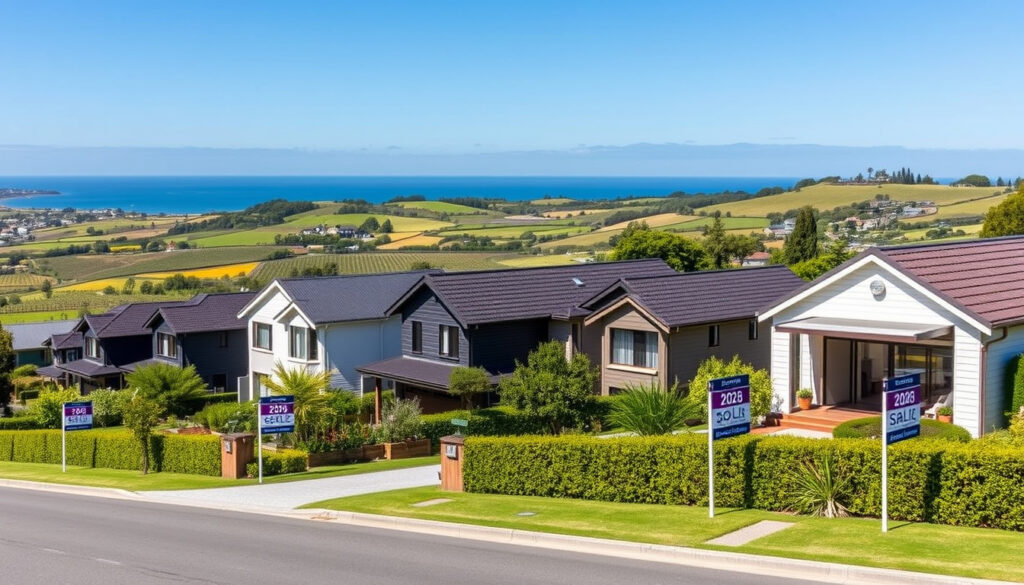
Houses for Sale Hawkes Bay – Prices, Suburbs and Market Guide 2026
The Hawke’s Bay property market has demonstrated steady resilience, with median house prices climbing to $705,000 as of February 2026, according to REINZ data. The region recorded approximately 5.7% year-on-year growth through 2025, driven primarily by owner-occupier demand across its three main districts: Napier City, Hastings District, and Central Hawke’s Bay District. Prices currently sit 7.49% above the decade-long average, reflecting a sustained upward trajectory that has seen annual gains average 7.63% over the past ten years. For buyers exploring the market, understanding which suburbs offer value, which command premiums, and how current inventory aligns with budget expectations can make the difference between a sound purchase and a missed opportunity.
The region’s appeal spans urban conveniences in Napier and Hastings, premium village living in Havelock North, and rural lifestyle options near wineries and coastline. Active listings across the region number in the hundreds, with Havelock North alone hosting over 170 properties at any given time. Regional sales activity remained healthy with 248 transactions recorded in March 2026, and properties typically selling within 40 days across the broader region. For those wondering how Hawke’s Bay prices compare to the wider New Zealand market, and which areas present genuine buying opportunities versus overheated segments, the data tells a nuanced story that rewards careful analysis.
Best Suburbs for Houses in Hawke’s Bay
Hawke’s Bay offers distinct neighborhood characters, each with different price points, lifestyle trade-offs, and growth trajectories. Choosing the right suburb depends heavily on budget, family needs, and whether long-term capital growth or immediate affordability takes priority.
Median Sale Price
Source: REINZ, Feb 2026
Active Listings in Havelock North
Source: realestate.co.nz
YoY Regional Growth (2025)
Source: Opes Partners
Avg Days on Market
Source: NZ Sotheby’s Realty
Premium Suburbs with Highest Prices
Eskdale, located within the Hastings District, commands the highest median price in the region at $1,176,800—roughly 167% of the regional median. This premium reflects its coastal positioning, exclusive rural lifestyle offerings, and proximity to some of Hawke’s Bay’s most desirable vineyards. Jervoistown in Napier City follows closely at $1,155,700, serving as the top-performing suburb within Napier’s boundaries. Both areas attract buyers seeking larger sections, newer construction, and proximity to premium amenities without the village atmosphere of Havelock North.
Havelock North remains the flagship suburb for those prioritising lifestyle, with a median of $1,039,300. The area boasts excellent schools, acclaimed wineries, and proximity to Te Mata Peak. Despite recording a slight year-on-year decline of -0.85%, the suburb has demonstrated long-term growth of 6.7%. The majority of residential stock was built between 2000 and 2009, and properties typically sit on the market for approximately 45 days before selling. The area recorded 340 sales over the past year, indicating healthy liquidity despite recent price softening.
Affordable Entry Points Under $500,000
For buyers working with tighter budgets, Flaxmere offers the cheapest entry point in the region at a median of $487,300—approximately 69% of the regional median. Maraenui in Napier City follows as the most affordable Napier suburb at $492,500. Both suburbs provide genuine opportunities for first-home buyers and investors seeking rental yields. Weekly rental rates in Hastings district average $555, suggesting gross rental yields around 4.5-5% depending on purchase price and property management costs.
Key Market Insights by Suburb
- Havelock North delivers premium village living with 91% residential stock, top school zones, and winery proximity, though prices have dipped slightly in recent quarters.
- Eskdale represents the region’s luxury segment, offering lifestyle blocks and coastal positioning at 167% of the regional median price.
- Waipukurau in Central Hawke’s Bay shows the slowest growth trajectory, declining approximately 3% year-on-year from March 2024 to March 2026.
- Napier City appears least overvalued at just 0.33% above expected pricing, suggesting stronger potential for future appreciation compared to other districts.
- Marewa in Napier led suburban growth over 24 months with approximately 1% year-on-year increase, indicating emerging buyer interest in certain Napier neighborhoods.
- Haumoana recorded modest 0.24% growth, reflecting stable demand in this Hastings coastal suburb.
| Suburb/Area | Median Price | YoY Change | Active Listings | Avg Days on Market |
|---|---|---|---|---|
| Eskdale (Hastings) | $1,176,800 | +Premium | Multiple listings | Varies |
| Jervoistown (Napier) | $1,155,700 | Strong | Multiple listings | Varies |
| Havelock North (Hastings) | $1,039,300 | -0.85% | 170+ | 45 days |
| Hastings District (Overall) | $750,000 | Regional avg | Extensive inventory | 16 days (district) |
| Waipukurau (Central Hawke’s Bay) | $548,300 | -3% | Limited | Varies |
| Maraenui (Napier) | $492,500 | Stable | Available | Varies |
| Flaxmere (Hastings) | $487,300 | Affordable tier | Available | Varies |
Current House Prices in Hawke’s Bay
Understanding the current pricing landscape requires separating headline regional figures from the granular suburb-level data that actually guides purchasing decisions. The regional median of $705,000 masks considerable variation across districts, property types, and neighbourhood quality.
Regional Price Trends and Growth Drivers
The Hawke’s Bay market demonstrated robust growth through 2025, with the median house price reaching $700,000 before climbing to $705,000 in February 2026. This performance placed the region ahead of many comparable markets, driven by sustained owner-occupier demand rather than speculative investment activity. The decade-long annual growth rate of 7.63% reflects a market that has consistently outpaced inflation while maintaining relative stability through economic cycles including the post-2020 property boom and subsequent corrections seen in other regions.
Current prices sit approximately 7.49% above the ten-year average, suggesting modest overvaluation but not the extreme premiums seen in Auckland or Queenstown markets. Napier City shows the most balanced positioning, with prices just 0.33% above expected values according to valuation analysis. This suggests Napier may offer better value retention and growth potential relative to Hastings District, where premium suburbs like Eskdale and Havelock North command significant location premiums.
REINZ data cited throughout this article reflects February and March 2026 figures. Property markets can shift rapidly in response to interest rate changes, seasonal factors, and economic conditions. Buyers should verify current listings and recent sales with realestate.co.nz or registered agents before making purchasing decisions.
District-Level Pricing Breakdown
The Hastings District overall shows a median of $750,000 at the district level, though the trailing twelve-month figure sits at $580,500, suggesting recent transactions have occurred at lower price points. This discrepancy likely reflects mix shift toward more affordable product types entering the market rather than broad-based price reductions. The median time to sell in Hastings district stands at just 16 days, indicating strong buyer demand and limited negotiating power for sellers in popular segments.
Central Hawke’s Bay presents a mixed picture, with Waipukurau showing the weakest growth trajectory in the region at -3% year-on-year. Properties in towns like Otane average around $640,500, while larger lifestyle blocks command premiums depending on land area and improvements. The slower growth in Central Hawke’s Bay reflects both greater distance from Napier and Hastings employment centres and smaller buyer pools for premium rural properties.
How to Buy a House in Hawke’s Bay
Purchasing property in Hawke’s Bay follows standard New Zealand real estate processes, though regional nuances in inventory, competition levels, and local market knowledge can significantly impact outcomes. A systematic approach combining finance pre-approval, thorough market research, and strategic viewing schedules maximises the chances of securing the right property at a fair price.
Finance and Pre-Approval Fundamentals
Before attending viewings or making offers, obtaining mortgage pre-approval from a New Zealand lender establishes a clear budget ceiling and signals to agents that the buyer is genuinely positioned to proceed. Pre-approvals typically remain valid for 90 days and subject to property valuation, giving buyers approximately three months to find and secure a property. Given that properties in desirable suburbs like Havelock North sell within 45 days, having finance confirmed before entering the market prevents missed opportunities during competitive bidding situations.
Buyers should also consider engaging a local mortgage adviser familiar with Hawke’s Bay property values and lending criteria. Some lenders offer better terms for properties in certain districts, and advisers can identify opportunities for first-home buyers accessing KiwiSaver withdrawals or Welcome Home Loans schemes applicable in the region.
With 170+ active listings in Havelock North and comparable inventory across Napier and Hastings, buyers should attend multiple viewings within their target suburbs before making offers. Properties in this price range typically attract multiple interested parties, and agents report that buyers who have conducted thorough viewings make more confident, competitive offers. Consider scheduling weekend viewings across Napier, Hastings, and Havelock North to compare neighborhoods directly.
Working with Local Agents
Hawke’s Bay hosts numerous real estate agencies ranging from global affiliates like NZ Sotheby’s Realty to independent local firms. Premium listings in Eskdale, Havelock North, and Napier’s established suburbs often appear with international agency affiliates, while more affordable entry-level properties cluster with agencies specialising in first-home buyer segments. Registering with multiple agents ensures buyers receive early notification of new listings before they appear on public portals.
Agent selection matters significantly in the Hawke’s Bay context. Havelock North agents report that properties in that suburb sell within 45 days on average, but properties exceeding 60 days on market often invite lower offers due to buyer suspicion about condition or pricing. An experienced local agent helps price offers accurately and identifies properties likely to attract competition versus those where buyers have more negotiating leverage.
Due Diligence and Property Inspection
Standard due diligence for Hawke’s Bay properties should include building inspections, title searches, and LIM (Land Information Memorandum) reports from the relevant district council. Given the region’s geological history, particularly the 2011 and subsequent earthquakes, buyers should specifically request documentation regarding any damage, repairs, or strengthening work undertaken on the property. Properties with documented earthquake damage and compliant repairs may still represent sound purchases at appropriate prices, but informed decision-making requires full disclosure.
Rental yield analysis should inform investment-focused purchases. Hastings district weekly rents average $555, while Havelock North rentals range from $460 to $950 weekly depending on bedrooms and condition. Gross rental yields of 4-5% are achievable in affordable suburbs like Flaxmere and Maraenui, though investors should account for property management fees, maintenance reserves, and vacancy periods when calculating net returns.
New and Off-Plan Homes in Hawke’s Bay
The Hawke’s Bay market offers limited new construction and off-plan inventory compared to larger New Zealand centres, though opportunities exist for buyers specifically seeking modern builds, custom builds, or property with manufacturer-backed warranties. Understanding the trade-offs between new and established property helps buyers make informed decisions aligned with their priorities.
New Construction Availability
Recent construction data indicates that Havelock North’s residential stock predominantly comprises homes built between 2000 and 2009, suggesting limited new build availability within established suburb boundaries. New homes construction in Hawke’s Bay occurs primarily through custom builds on existing sections, lifestyle block development in areas like Eskdale, and commercial subdivision projects in growth corridors surrounding Napier and Hastings. Buyers seeking brand-new properties may need to consider peripheral locations or engage directly with local builders willing to construct on purchaser-provided sites.
The NZ Sotheby’s Realty listings occasionally include newly constructed luxury properties, particularly in premium Eskdale and Havelock North addresses where discerning buyers prioritise modern construction, thermal performance, and contemporary design. These properties command significant premiums over equivalent established homes but offer advantages including lower maintenance requirements, compliance with current building standards, and manufacturer warranties.
Rural and Lifestyle Property Options
Rural and lifestyle properties represent a distinct segment within the Hawke’s Bay market, with particular concentration in Central Hawke’s Bay, coastal areas like Haumoana, and areas proximate to the region’s renowned wineries. Otane offers rural properties averaging around $640,500, while coastal lifestyle blocks in areas like Eskdale command premiums dependent on sea views, section size, and access to beaches. The lifestyle appeal of Hawke’s Bay—combining rural tranquility with urban convenience—continues attracting buyers from Auckland and Wellington seeking better value without sacrificing accessibility to amenities.
Buyers considering lifestyle properties should verify zone classifications with the Hawke’s Bay Regional Council and confirm any resource consents required for intended land use. Agricultural zoned properties may have restrictions on construction or subdivision that affect future value, while lifestyle blocks typically require self-owned water supply and on-site wastewater management systems meeting regional council standards.
Coastal properties in areas like Eskdale and Haumoana offer lifestyle appeal but carry specific risks including potential coastal erosion, insurance implications, and resource consent requirements for certain improvements. Buyers should obtain specialist inspections and verify insurance availability before committing to coastal property purchases. For those seeking budget-friendly options, exploring the cheapest houses for sale might reveal some hidden gems.
Beach Properties and Waterfront Access
Beach access properties in Hawke’s Bay range from modest holiday homes to premium coastal estates. Haumoana and surrounding coastal Hastings areas offer beachfront positioning with median growth of 0.24% year-on-year, reflecting stable rather than explosive demand. Properties with direct beach access or sea views command premiums of 15-30% over equivalent inland properties, though rental returns during peak seasons can partially offset carrying costs for investors.
Market Trends and Timeline
The Hawke’s Bay property market has evolved considerably over recent years, with prices, inventory, and buyer composition shifting in response to regional economic conditions, national policy changes, and changing work patterns accelerated by the pandemic. Understanding this trajectory provides context for current market positioning and future expectations.
- 2015-2020: Steady price growth averaging approximately 5-6% annually, driven by consistent regional employment in agriculture, manufacturing, and tourism. Hawke’s Bay remained one of New Zealand’s more affordable regions relative to major centres.
- 2021: National property boom significantly impacted Hawke’s Bay, with prices accelerating beyond historical averages as remote work enabled city dwellers to relocate seeking lifestyle benefits and relative affordability.
- 2022-2023: Post-boom correction saw reduced growth rates, though Hawke’s Bay avoided the steep declines experienced in some northern markets. The February 2023 Hawke’s Bay floods created temporary market uncertainty before recovery resumed.
- 2024: Regional median reached $681,500 with stable demand. Owner-occupier buyers dominated, reducing speculative activity. Marewa and Haumoana showed modest positive growth.
- 2025: Strong recovery with 5.7% year-on-year growth pushing median to $700,000. Napier City showed particularly strong performance with prices just 0.33% above expected values, suggesting undervalued positioning.
- 2026: February 2026 data shows median at $705,000 with 248 sales in March. Havelock North recorded 340 annual sales. Market stability maintained with 40-day average selling period regionally.
What the Data Confirms and What Remains Unclear
Transparency about what is established versus what remains uncertain serves buyers better than overconfident predictions. The Hawke’s Bay market data tells a clear story in some respects while presenting genuine ambiguity in others.
| Established Information | Information That Remains Unclear |
|---|---|
| Regional median $705,000 as of February 2026 | Whether interest rate changes will impact 2026 second-half prices significantly |
| 5.7% year-on-year growth through 2025 | Whether Havelock North price softness will continue or reverse in coming quarters |
| Havelock North median $1,039,300, down -0.85% YoY | Whether new build construction will increase in Napier growth corridors |
| Flaxmere at $487,300 as region’s most affordable suburb | Whether Central Hawke’s Bay will see renewed buyer interest as Napier/Hastings prices climb |
| Napier City least overvalued at 0.33% above expected | Impact of potential policy changes on investor activity levels |
| Properties averaging 40 days to sell regionally | How climate adaptation measures might affect coastal property values |
Why Hawke’s Bay Attracts Buyers
Hawke’s Bay has emerged as a compelling destination for New Zealand property buyers seeking a balance between lifestyle quality, investment fundamentals, and relative affordability compared to Auckland and Wellington markets. The region’s economic foundation rests on diversified industries including horticulture, agriculture, manufacturing, and a growing tourism sector centred on wine, food, and outdoor experiences.
The climate supports outdoor lifestyles year-round, with Hawke’s Bay consistently recording among New Zealand’s highest sunshine hours. Proximity to beaches, national parks, and internationally recognised wineries creates weekend recreation opportunities that urban centres cannot match. For families, the presence of quality schools in Havelock North and Napier, combined with lower property prices than comparable lifestyle destinations, makes the region attractive for both first-home purchases and upgrade moves from smaller centres.
Infrastructure investment continues to improve regional connectivity, with upgraded highways reducing travel times to Palmerston North and improved digital connectivity enabling continued remote work arrangements established during the pandemic. The Hawke’s Bay Regional Council has prioritised climate resilience projects following the 2023 floods, with ongoing investment in flood protection and infrastructure modernisation supporting long-term property values.
Sources and Market Data
This article draws on multiple verified data sources to ensure accuracy and provide readers with avenues for additional research. The primary dataset comes from the Real Estate Institute of New Zealand (REINZ), which compiles comprehensive sales data across all New Zealand regions. REINZ data cited includes median prices, sales volumes, days on market, and suburb-level breakdowns.
REINZ median house price data, updated monthly, provides the authoritative benchmark for regional and district-level price tracking. The February 2026 regional median of $705,000 and accompanying suburb breakdowns represent verified sales data collected through REINZ’s comprehensive reporting network.
— REINZ Regional Sales Data, February-March 2026
Supporting analysis comes from Opes Partners, which provides detailed suburb-level breakdowns, overvaluation metrics, and growth trajectory analysis. Tremains Hawke’s Bay contributes local market expertise and current listing data, while NZ Sotheby’s Realty provides insight into premium property segments and lifestyle property trends.
Napier City shows the least overvaluation in the region at just 0.33% above expected values, suggesting that buyers in Napier may find better long-term value retention compared to suburbs where prices have run further ahead of fundamental valuations.
— Opes Partners Market Analysis, 2026
For further property valuation context, Quotable.co.nz provides rateable value data that complements REINZ sales data, while Stats NZ offers demographic and economic context relevant to understanding regional housing demand drivers.
Summary
The Hawke’s Bay property market offers a balanced combination of established suburbs, emerging value opportunities, and lifestyle appeal that continues attracting buyers from throughout New Zealand. The regional median of $705,000 reflects prices 7.49% above the decade average, with suburbs like Havelock North commanding premiums for lifestyle access while affordable options in Flaxmere and Maraenui provide entry points under $500,000. Napier City shows particular promise for buyers seeking undervalued positioning with strong growth potential, while Hastings District premium suburbs deliver established quality at location premiums. Active inventory remains healthy across the region, and properties typically sell within 40-45 days, indicating functional market liquidity. For buyers considering houses for sale Ngatea or houses for rent Masterton as alternatives, Hawke’s Bay presents a distinct market character worth comparing directly against neighbouring regions. Interested buyers should verify current listings with realestate.co.nz and engage local agents familiar with specific suburb dynamics before making purchasing decisions.
Frequently Asked Questions
What is the median house price in Hawke’s Bay as of early 2026?
The regional median house price reached $705,000 as of February 2026 according to REINZ data, representing approximately 5.7% year-on-year growth through 2025.
Which suburb in Hawke’s Bay is most expensive?
Eskdale in the Hastings District is the most expensive suburb at a median of $1,176,800, approximately 167% of the regional median. This reflects its coastal positioning and premium lifestyle property offerings.
Where can I find affordable houses under $500,000 in Hawke’s Bay?
Flaxmere offers the cheapest entry point at $487,300, while Maraenui in Napier City provides the most affordable Napier suburb at $492,500. Both represent viable options for first-home buyers and investors.
How long does it take for properties to sell in Havelock North?
Properties in Havelock North typically sell within 45 days on market, with 340 annual sales recorded. The suburb recorded 49 new listings recently alongside over 170 active listings total.
Is Hawke’s Bay a good investment compared to other NZ regions?
Napier City appears least overvalued at just 0.33% above expected values, suggesting potential for better value retention. The region has shown steady 7.63% annual growth over ten years and maintains balanced owner-occupier demand without extreme speculation.
What are the rental yields like in Hawke’s Bay?
Hastings district weekly rents average $555, suggesting gross rental yields around 4-5% in affordable suburbs. Havelock North rentals range from $460 to $950 weekly depending on bedrooms and condition, with higher yields typically available in more affordable areas.
Should I buy in Napier or Hastings for growth potential?
Napier City shows the least overvaluation suggesting stronger future growth potential, while Hastings District contains premium suburbs with established quality. The choice depends on budget, lifestyle priorities, and whether capital growth or immediate affordability takes priority.
What lifestyle features make Hawke’s Bay attractive for buyers?
Hawke’s Bay offers beaches, national parks, internationally recognised wineries, excellent schools, and consistently high sunshine hours. The region combines rural and coastal lifestyle options with urban conveniences in Napier and Hastings, accessible at prices significantly below comparable major centre alternatives.
More related posts
 How Many Teaspoons in a Tablespoon in NZ? Conversion Guide
 Kiwis vs Samoa 2025 Time: Final Result & Kickoff Details
 285/75R16 in Inches: Size, Equivalents & Comparisons
 Cashier’s Check: Definition, How to Get One, and Risks Explained
 Bank Holiday Social Welfare Payments 2026: Early Dates
 Adidas Chinese New Year Jacket: Real, Price, Buy & Fake Guide
 Immigration NZ Phone Number: Official Contacts & Hours
 How Much Is Netflix Per Month? 2025 Plans & Pricing