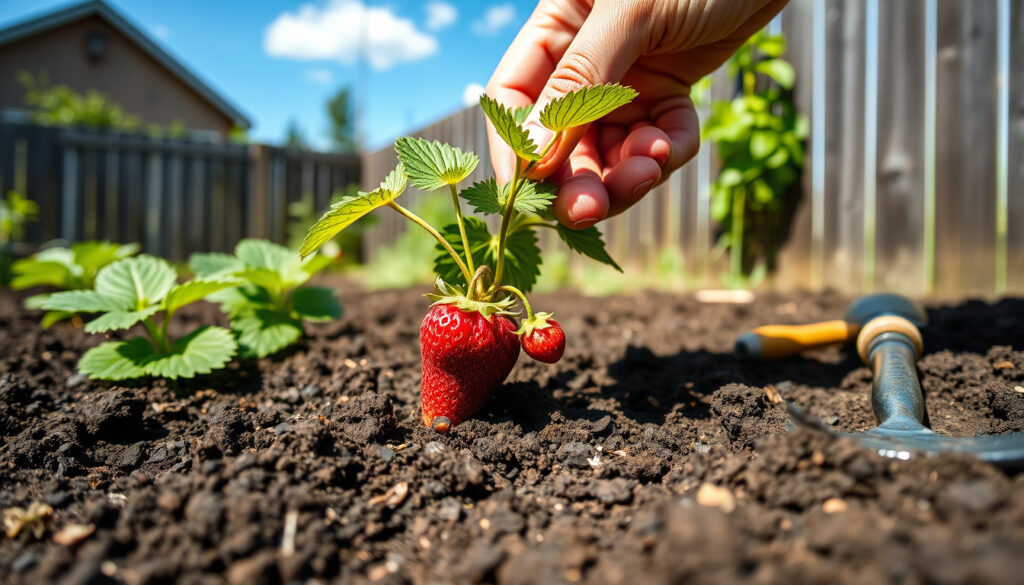
When to Plant Strawberries in NZ: Timing, Care & More
There’s something special about picking your own strawberries from the garden, especially when you’ve timed the planting just right. In New Zealand, the ideal window runs from June to November, but getting the best harvest means matching your planting to your local climate zone. Whether you’re on a Northland lifestyle block or a Southland backyard, this guide covers timing, companion plants, and seasonal care to help you succeed.
Planting window in NZ: June to November · Ideal temperature: 15–25°C · Sunlight needed: 6–8 hours daily · Time to harvest: 60–90 days after planting
Quick snapshot
- Strawberries are planted June–November in NZ (Kings Plant Barn)
- Need 6–8 hours of sunlight daily (Bonnie Plants)
- Space plants 30 cm apart (Palmers garden centre)
- Optimal pot size for maximum yield
- Exact effectiveness of baking soda as a fungicide without controlled trials
- Precise timing for dividing plants in each NZ region
- March–May: post-harvest care, cut back foliage, mulch
- June–August: winter dormancy, minimal care
- June–September: plant in warmer climates (The Kiwi Country Girl)
- August–September: plant in cooler climates (The Kiwi Country Girl)
- December–February: harvest period (Daltons)
- October–November: late planting and transplanting possible (Kings Plant Barn)
Five key facts every NZ strawberry grower should know, from soil requirements to spacing.
| Fact | Details |
|---|---|
| Planting window NZ | June–November (Kings Plant Barn) |
| Days to harvest | 60–90 days (Kings Plant Barn) |
| Sunlight needed | 6–8 hours (Bonnie Plants) |
| Soil pH | 5.5–6.5 (Palmers garden centre) |
| Spacing | 30–40 cm (Palmers) |
When should you plant strawberries in New Zealand?
When to plant strawberries in Auckland?
- Auckland sits in a warm northern region, so plant from June to September (The Kiwi Country Girl).
- Mitre 10 recommends June to October for northern areas (Mitre 10 Easy As Garden).
- Avoid late spring planting when soil warms up – earlier gives stronger crowns.
Auckland gardeners who plant before September catch the cooler weather that prevents heat stress on young plants, giving a longer harvest window.
When to plant strawberries in winter?
- Winter planting is possible in warmer regions if you protect plants with cloches or raised beds (Palmers garden centre).
- For most of NZ, the classic window is late winter to early spring (July–September).
- In cooler areas like Southland, wait until August–September.
When to plant strawberries in pots?
- Same timing applies: June–November, with early spring (August–October) considered best (Kings Plant Barn).
- Pots warm up faster than ground, so you can plant a few weeks earlier in sheltered spots.
Planting steps:
- Choose a sunny, sheltered spot – strawberries need at least 6–8 hours of sun (Bonnie Plants).
- Prepare soil: slightly acidic (pH 5.5–6.5), rich in organic matter (Palmers).
- Space plants 30 cm apart, rows 40 cm apart.
- Plant so the crown sits just above the soil line (Palmers).
- Water well after planting and mulch to retain moisture.
Even with perfect timing, a late frost can damage flowers. Keep frost cloth handy in spring for southern gardens.
The pattern: In New Zealand, strawberry planting is not a one-size-fits-all date — your location and local microclimate determine the ideal window. Failure to match timing to your region can leave plants struggling through frost or missing the summer heat for ripening.
Do strawberry plants do better in pots or ground?
Three key differences between container and in-ground growing, with trade-offs for each.
| Aspect | Pots | Ground |
|---|---|---|
| Drainage | Excellent – can control soil mix (Bonnie Plants) | Depends on soil type; may need raised beds |
| Watering | More frequent – pots dry faster | Less frequent, but risk of overwatering |
| Yield | Limited by pot size; 3–5 plants per 40 cm pot | Higher potential with more space |
| Disease risk | Lower – fresh potting mix avoids soil-borne pathogens (Palmers) | Higher risk of verticillium wilt and root rot |
| Mobility | Can move to sun or shelter | Permanent location |
Upsides
- Pots: better drainage, mobile, less soil disease
- Ground: more space for runners, bigger harvests
- Ground: natural soil nutrients, less watering
Downsides
- Pots: need daily watering in summer, limited root space
- Ground: soil preparation required, risk of soil-borne diseases
- Ground: permanent location means you can’t chase the sun
The trade-off: For most home gardeners, a mix of both works best — a few pots for mobility and a ground patch for larger harvests, as long as you rotate the ground bed every three years.
What should you not plant strawberries next to?
Plants to avoid near strawberries
- Avoid members of the Solanaceae family: tomatoes, peppers, potatoes, eggplants – they share soil-borne diseases (Gardenia.net).
- Keep brassicas (cabbage, broccoli, kale) away – they compete for nutrients.
- Garlic can inhibit strawberry growth; use onions or chives instead (Gardenia.net).
Best companion plants for strawberries
- Borage attracts bees and improves flavour (Gardenia.net).
- Lettuce and spinach act as living mulch, shading soil and suppressing weeds (Gardenia.net).
- Thyme and chives help deter pests.
- Alyssum, calendula, and scabiosa attract pollinators (Gardenia.net).
White clover can be used as a living mulch, but it may compete for nitrogen in poor soils – test your soil first (Gardenia.net).
Why this matters: A well-planned companion planting scheme reduces the need for chemical sprays and can boost yields by improving pollination and soil health.
What does Epsom salt do for strawberries?
Benefits of Epsom salt (magnesium and sulfur)
- Magnesium supports chlorophyll production and fruit development. Some gardeners apply Epsom salt as a supplement, though results are anecdotal.
- Bonnie Plants notes that strawberries prefer slightly acidic soil (pH 5.5–6.8) – Epsom salt can help maintain that balance when used sparingly (Bonnie Plants).
How to apply Epsom salt
- Mix 1 tablespoon of Epsom salt per litre of water and apply as a soil drench once a month during the growing season.
- Avoid overuse – too much can lead to salt buildup in pots.
Using coffee grounds and baking soda
- Coffee grounds add nitrogen and acidity; sprinkle lightly around plants (Palmers notes the ideal pH is 5.5–6.5, so use coffee grounds in moderation).
- Baking soda diluted as a spray (1 teaspoon per litre of water) is sometimes used as a DIY fungicide, but controlled studies are lacking.
The implication: Soil amendments can help, but they’re not a substitute for proper planting time and site selection. Treat them as fine-tuning, not a magic fix.
What do I do with strawberry plants in autumn?
End of season care in NZ
- After the last harvest (usually late January to March), cut back old foliage to 5 cm above the crown (Daltons).
- Mulch around crowns with straw or pine needles for winter protection.
- Remove any diseased leaves to prevent overwintering pathogens.
Transplanting strawberries in October
- October is spring in NZ – it’s a good time to transplant established runners to a new bed.
- Water well before moving, and replant with the crown just above soil level.
- October planting is also ideal for late-blooming regions like Canterbury.
Dividing strawberry plants
- Divide plants in early spring (August–September) or right after fruiting (January–February).
- Choose vigorous crowns from 1–2 year old plants.
- Replant divisions at the same depth and water generously.
“We do however recommend when planting to get them into the soil early in the morning or late in the day.”
— Palmers garden centre
“Any time from June-September for warmer climates and August/September for cooler climates.”
— The Kiwi Country Girl
For more information on planting strawberries in NZ, check out this Billie Eilish net worth.
“Strawberries are best planted from June to November, with early spring from late August to October highlighted as the best time.”
— Kings Plant Barn
Every region in New Zealand has its sweet spot. For Auckland gardeners, the window is June to September; for Southland, August to September. The key is to match your planting to your local microclimate – and to act early, because strawberries that go in on time produce consistently longer harvests. For gardeners in cooler areas, skipping the winter rush and waiting until early spring gives plants a stronger start. The choice is clear: plant in the window that fits your zone, or face a disappointing summer.
Related reading: planting strawberries a sweet guide to growing at home · how to grow strawberries
bertsberryfarm.com, facebook.com, natashamorgan.com.au, tiktok.com, youtube.com, marthastewart.com
For those new to gardening, a beginner’s guide to growing strawberries in pots or ground offers practical tips that complement the seasonal advice for New Zealand growers.
Frequently asked questions
How often should I water strawberries?
Strawberries need consistent moisture – about 2–3 cm of water per week. In pots, daily watering is often needed in summer.
Do strawberries need full sun?
Yes, they need at least 6–8 hours of direct sunlight each day (Bonnie Plants). Less sun reduces yield and sweetness.
How long do strawberry plants live?
Typically 3–5 years, but peak production happens in years 1–2. Replace plants or renew the bed every few years.
Can I grow strawberries from seeds?
Yes, but it’s slower. Most gardeners buy bare-root crowns for faster results and better fruit quality.
What is the best fertilizer for strawberries?
Use a balanced fertiliser (e.g., 10-10-10) at planting, then switch to a high-potassium feed during flowering and fruiting (Palmers).
Why are my strawberries small?
Often due to lack of water, poor soil nutrients, or overcrowding. Thin runners and ensure adequate watering.
How to protect strawberries from birds?
Use netting over the bed as fruit ripens. Reflective tape or scarecrows offer limited protection.
When to harvest strawberries?
From December to February, when berries are fully red and slightly soft. Pick early in the morning for the longest shelf life (Daltons).
More related posts
 Bonnie Blue Net Worth 2025: How Much She Really Earns on OnlyFans
 International Rugby Results Today: Scores, Fixtures & Man of the Match
 Houses for Sale Ngatea – Latest Listings and Market Insights
 Copper Price Per Pound: Current Rate & Scrap Value Guide
 Mercury Energy Customer Service: Phone, Hours & Email
 The Accountant 2 Cast: Returning Actors and New Faces
 House and Land Packages Christchurch: 2025 Guide & Prices
 How Many Tablespoons in 1/4 Cup – Exact Conversion Chart