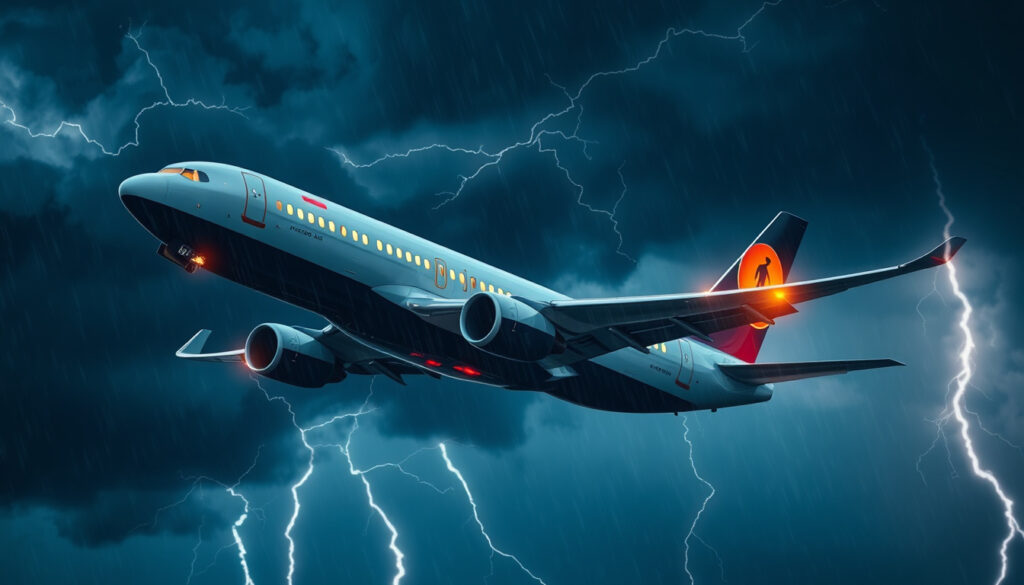
Unexpected Turbulence on Qantas Flight: ATSB Report Findings
Few things make a passenger’s stomach drop quite like sudden turbulence, especially when the seatbelt sign is off. On May 4, 2024, a Qantas Boeing 737 flying from Sydney to Brisbane encountered severe unexpected turbulence that sent three cabin crew to the hospital, and a year later the Australian Transport Safety Bureau found that pilots never warned the crew.
Incident date: May 4, 2024 ·
Flight route: Sydney (SYD) to Brisbane (BNE) ·
Aircraft type: Boeing 737 ·
Crew injured: 3 ·
Serious injury: Broken ankle ·
Report released: May 27, 2025
Quick snapshot
- Qantas Boeing 737 hit severe unexpected turbulence at ~11,400 ft near Brisbane (ATSB final report)
- Three cabin crew injured, one with a fractured ankle (9News summary)
- Why the pilots did not warn the crew (Mirage News report)
- Exact g-force of the turbulence (Mirage News report)
- May 4, 2024 – Incident occurred (ATSB final report)
- May 27, 2025 – ATSB report released (9News)
- Qantas updated medical assistance procedures for injured crew (Mirage News)
- Increased focus on pre-turbulence crew briefings (Mirage News)
Six key facts stand out from the ATSB report and related coverage:
| Fact | Detail |
|---|---|
| Incident | Unexpected turbulence on Qantas flight from Sydney to Brisbane |
| Date | May 4, 2024 |
| Aircraft | Boeing 737 |
| Crew injured | 3 (one serious: broken ankle) |
| ATSB report release | May 27, 2025 |
| Key finding | Pilots did not warn cabin crew before turbulence |
Why plane turbulence is really becoming more frequent and severe
Climate change is making the skies bumpier. According to research from the University of Reading, clear-air turbulence over the North Atlantic has increased by 55% since 1979 (University of Reading climate study). Warming jet streams are becoming more unstable, and models project a doubling of severe turbulence by 2050 (AGU journal study on turbulence projections).
Role of climate change in clear-air turbulence
- Warmer air amplifies wind shear, especially at cruising altitudes.
- Clear-air turbulence is invisible to radar and harder to predict.
- The increase is most pronounced in the mid-latitudes where most airline routes fly.
The implication: what was once a rare surprise is becoming more common, raising the stakes for pilot–crew communication.
A warmer atmosphere means more energy in the jet stream. For airlines, that translates directly into more unexpected jolts — and more opportunities for crew injuries if warnings aren’t given.
How jet streams affect turbulence intensity
- Jet streams are fast-moving air currents at 30,000–40,000 feet.
- When the temperature gradient between equator and pole steepens, jet streams become stronger and more turbulent.
- Climate change is increasing that gradient, especially in winter.
The catch: stronger jet streams don’t just mean faster flights eastbound — they mean rougher rides for everyone on board.
Do pilots notice turbulence?
Pilots use weather radar, forecasts, and reports from other aircraft to anticipate bumps. Yet the ATSB report on the Qantas incident found that the captain was not aware of the severity of the coming turbulence and therefore did not warn the cabin crew (Mirage News report). This gap between detection and communication lies at the heart of the three injuries.
How pilots detect turbulence via weather radar and reports
- Onboard weather radar can detect precipitation-associated turbulence (convective), but not clear-air turbulence.
- Pilots rely on pilot reports (PIREPs) from other aircraft ahead.
- Satellite-based tools like the National Weather Service’s turbulence guidance are improving but not yet universal.
What this means: even with modern tools, a sudden patch of clear-air turbulence can catch the most experienced crew off guard.
Do pilots get scared of turbulence?
- Most pilots view turbulence as a normal, manageable part of flying.
- Training emphasizes that the aircraft can withstand forces far beyond typical turbulence (see Wikipedia – Turbulence).
- Fear is rare; frustration at passenger inconvenience is more common.
The pattern: as long as seatbelts are fastened, turbulence is rarely dangerous to the aircraft. The real risk is to those not buckled in — which is exactly what happened on the Qantas flight.
Pilots are trained to trust the airplane’s structural limits, but that confidence can backfire if it leads them to underestimate how hard the crew will be thrown when the warning isn’t given.
What do flight attendants do during turbulence?
When turbulence hits, cabin crew are trained to secure the galley, stow loose items, and instruct passengers to fasten seatbelts. But if no warning comes, they remain vulnerable. On the Qantas flight, the crew were thrown into the galley because they had no time to brace (ATSB official Facebook post).
Safety procedures for cabin crew
- Before descent, crew typically secure carts, lock overhead bins, and take their jump seats.
- If the seatbelt sign is on, crew must remain seated.
- In the Qantas case, the sign was apparently off, and no verbal warning was given.
The implication: a simple 30-second announcement can mean the difference between a routine landing and a trip to the hospital.
Injuries caused by unexpected turbulence
- On May 4, one crew member suffered a fractured ankle, another minor facial injuries, and a third a concussion (9News).
- The crew member with a concussion returned to work before seeking treatment — the ATSB found the operator lacked a procedure to assess fitness after such injuries (ATSB final report).
Why this matters: the event exposed not only a communication gap but also a post-incident safety gap that can compound harm.
Do pilots speed up through turbulence?
Contrary to what many passengers assume, pilots typically do not speed up through turbulence. In fact, they often slow down.
Turbulence penetration speed concept
- Every aircraft has a designated turbulence penetration speed (VA).
- Below VA, the aircraft will stall before structural damage occurs, protecting the airframe.
- Speeding up can worsen the ride and risk exceeding load limits (Ask the Pilot – turbulence guide).
The trade-off: slowing down makes the bumps less violent but increases flight time and fuel burn. Airlines accept that cost for safety.
Why speed changes are made
- If turbulence is expected, pilots may reduce speed before entering it.
- After a jolt, they may adjust speed to reduce further loads.
- Autopilot often handles the speed changes automatically when in turbulence mode.
The pattern: turbulence handling is a well-rehearsed procedure. The failure in the Qantas event wasn’t about speed — it was about communication.
Why aren’t pilots afraid of turbulence?
Pilots are trained that turbulence is a normal aerodynamic phenomenon. The aircraft is engineered with safety margins that far exceed anything normally encountered.
Pilot training and experience
- All commercial pilots undergo extensive training on upset prevention and recovery.
- Turbulence is discussed in initial and recurrent training.
- Experience builds confidence: most pilots have flown through hundreds of patches without incident.
The catch: that same confidence can lead to complacency in communicating the risk to the cabin crew — the exact issue the ATSB flagged.
Aircraft design and safety margins
- Airframes are tested to withstand forces up to 1.5 times the maximum expected load (limit load) before permanent deformation (Wikipedia – Aircraft design load factors).
- Modern jets like the Boeing 737 have a design gust load that covers most turbulence scenarios.
- Severe turbulence is still rare and rarely causes structural failure.
What this means: the plane can handle it. The people inside — especially those not strapped in — are the vulnerable part.
Timeline of the Qantas turbulence event
- May 4, 2024 — Qantas flight from Sydney to Brisbane encounters severe unexpected turbulence at ~11,400 ft during descent. Three cabin crew injured, one with a fractured ankle. Aircraft lands safely (ATSB final report).
- May 27, 2025 — ATSB releases final report citing lack of pilot warning to crew and recommending procedural changes (Mirage News).
The timeline highlights how a single communication lapse can lead to serious injuries, and the year-long gap before the report underscores the thoroughness of the investigation.
What we know — and what remains unclear
Confirmed facts
- Three cabin crew injured by unexpected turbulence on Qantas flight QF (SYD–BNE) on May 4, 2024
- Pilots did not warn crew before the turbulence
- One crew member suffered a broken ankle
- The aircraft landed safely
- ATSB report released May 27, 2025
What’s unclear
- Why the pilots did not warn the crew (speculation but not confirmed)
- Exact severity of turbulence in terms of g-force
- Whether turbulence was forecast but missed
These gaps point to systemic issues in pilot–crew communication during unexpected events.
Quotes from the report and official sources
“A Qantas 737 landed with four people out of their seats assisting a cabin crew member injured after the aircraft encountered severe unexpected turbulence.”
“The pilots failed to warn crew of the impending severe turbulence, leaving them unprepared and vulnerable to injury.”
— 9News summary of ATSB report
The ATSB report makes clear that the failure was not one of equipment but of procedure. The captain later told investigators he had not anticipated the severity of the turbulence. Whether better forecasting tools could have changed the outcome remains an open question.
Summary: What this means for the future
As clear-air turbulence becomes more frequent, the margin for communication error narrows. For Qantas and the broader industry, the lesson is sharp: a pilot’s confidence in the aircraft’s strength is no substitute for a simple, timely warning to the cabin crew. For airlines, the choice is clear: invest in better turbulence detection and crew briefing protocols, or accept that more crew will be thrown — and injured — when the next unexpected jolt hits.
Frequently asked questions
Is turbulence dangerous for the aircraft?
No. Aircraft are designed with large safety margins. Turbulence is rarely strong enough to damage the structure. The real danger is to people not wearing seatbelts (Wikipedia – Turbulence safety).
How common is severe turbulence on flights?
Severe turbulence is rare, affecting less than 1% of flights. However, clear-air turbulence is becoming more common due to climate change, with a 55% increase since 1979 over some routes (University of Reading research).
What should passengers do during turbulence?
Stay seated and keep your seatbelt fastened at all times. Listen to crew instructions and avoid standing until the seatbelt sign is off.
How do pilots predict turbulence?
Pilots use weather radar, forecasts, and reports from other aircraft. Clear-air turbulence remains difficult to predict (Ask the Pilot – turbulence prediction).
Are some flight routes more prone to turbulence?
Yes. Routes near mountains, over the equator, or in the jet stream (e.g., transatlantic flights) see more turbulence. The Sydney–Brisbane route is generally not considered high-risk.
Can turbulence cause a plane to crash?
Extremely unlikely. No major airline accident in recent years has been caused by turbulence alone. The last turbulence-related fatality in a large commercial jet was in 1992.
What altitude has the most turbulence?
The worst turbulence is often near jet-stream altitudes (30,000–40,000 feet) or during descent through convective clouds. Low-level turbulence near mountains can also be severe.
More related posts
 24 USD to NZD: Live Rate, Fees & How to Avoid Hidden Costs
 The Talented Mr. Ripley: Themes, Adaptations, and Queer Subtext
 South Africa vs Australia Rugby: TV Channels & Kick-off Times
 What Is a Second Cousin? Definition, Examples & Family Tree Guide
 When to Plant Strawberries in NZ: Timing, Care & More
 Kids Rugby Boots NZ – Best Picks, Sizes and Buying Guide
 How Old is Taylor Swift? Age, Birthday, Net Worth & Facts 2024
 16 USD to NZD: Rate, Weakness & Cost of Living